'Unhidden Heroines' by Smithsonian American Women's History Museum
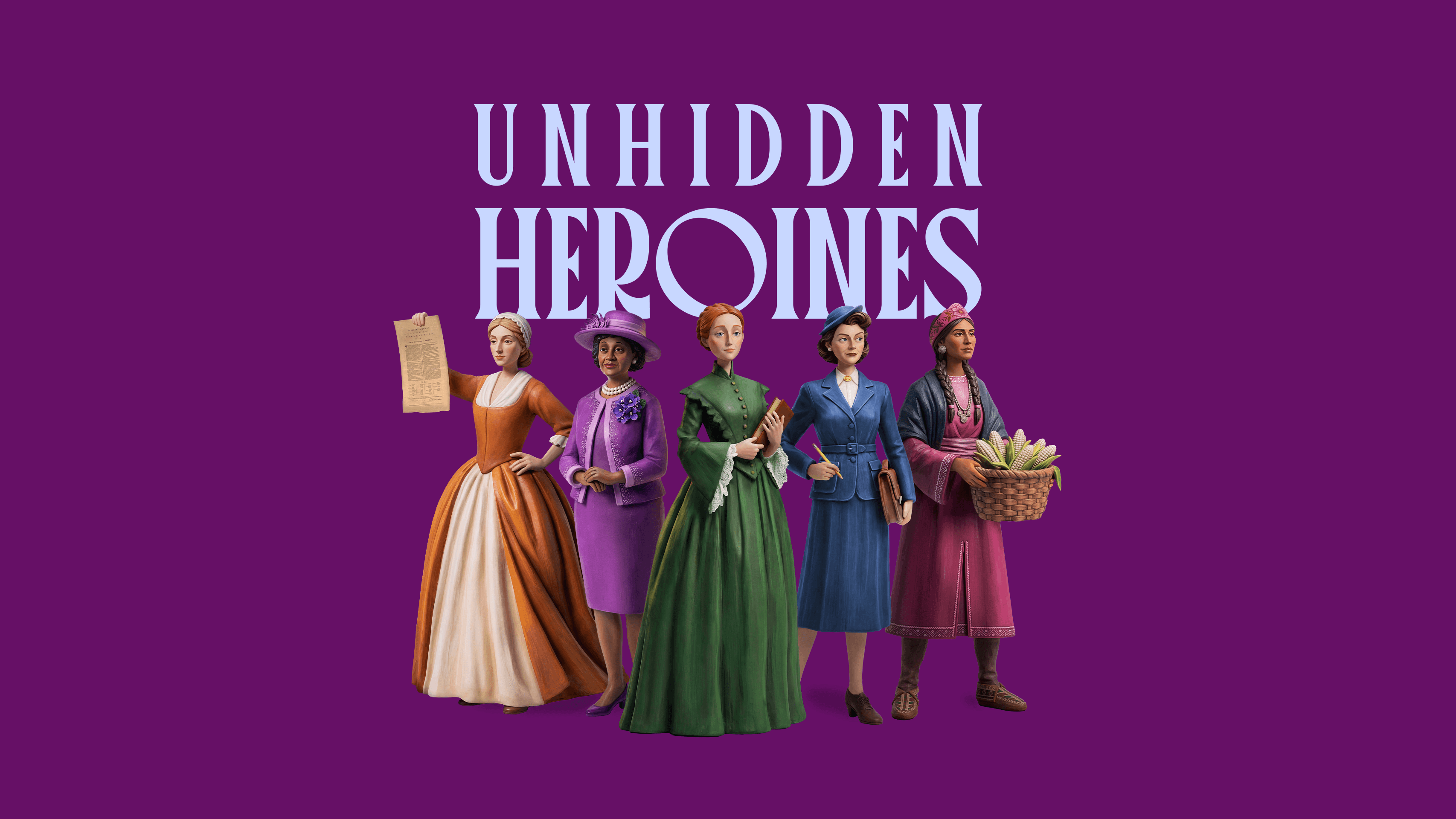 Image courtesy of the Smithsonian American Women’s History Museum.
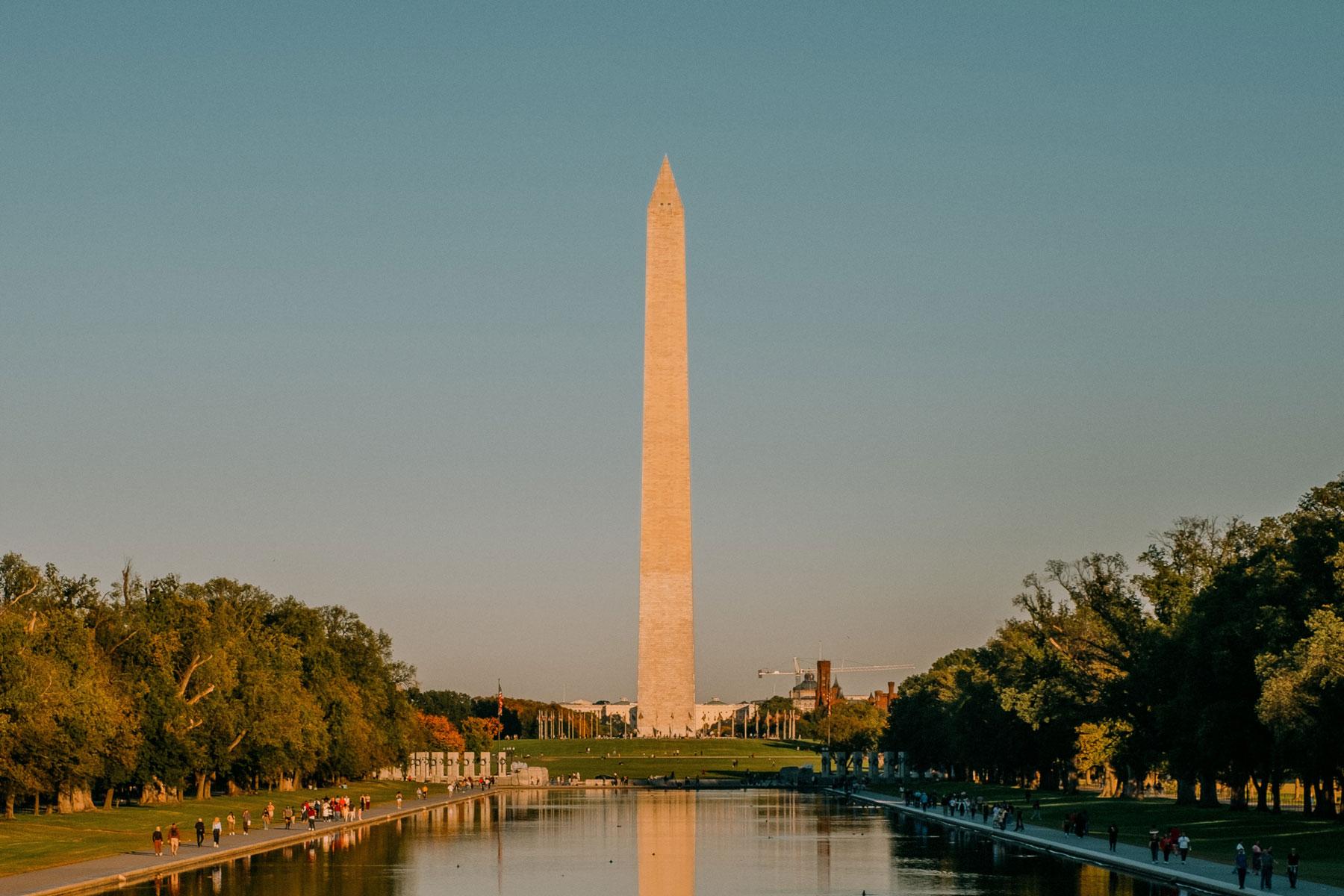
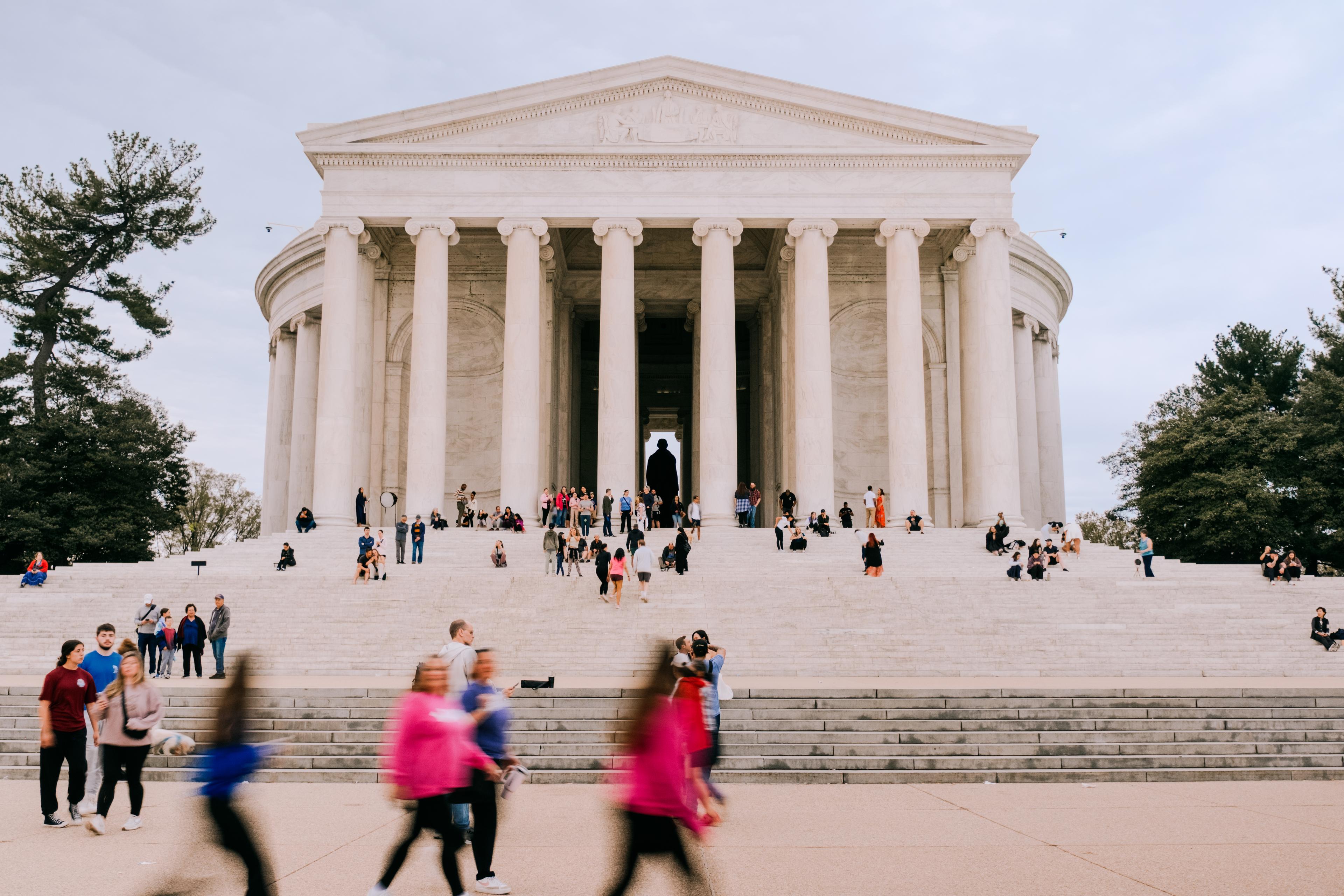
In celebration of America’s 250th anniversary, the Smithsonian American Women’s History Museum launched Unhidden Heroines, an augmented reality experience that brings stories of women who shaped American history to life at five of the monuments and memorials on the National Mall.
Visitors to the National Mall can enjoy “Unhidden Heroines” by holding their smartphones or tablets up to each monument or memorial for the stories to appear on screen. Audiences can also explore the experience remotely from any location in either at-home AR or static non-interactive formats.
Through geolocation, original illustrations, custom sound, and interactive elements, visitors can step into the worlds of Mary Katharine Goddard, Dorothy Height, Julia Ward Howe, Elizebeth Smith Friedman, and Polly Cooper.
Meet the women:
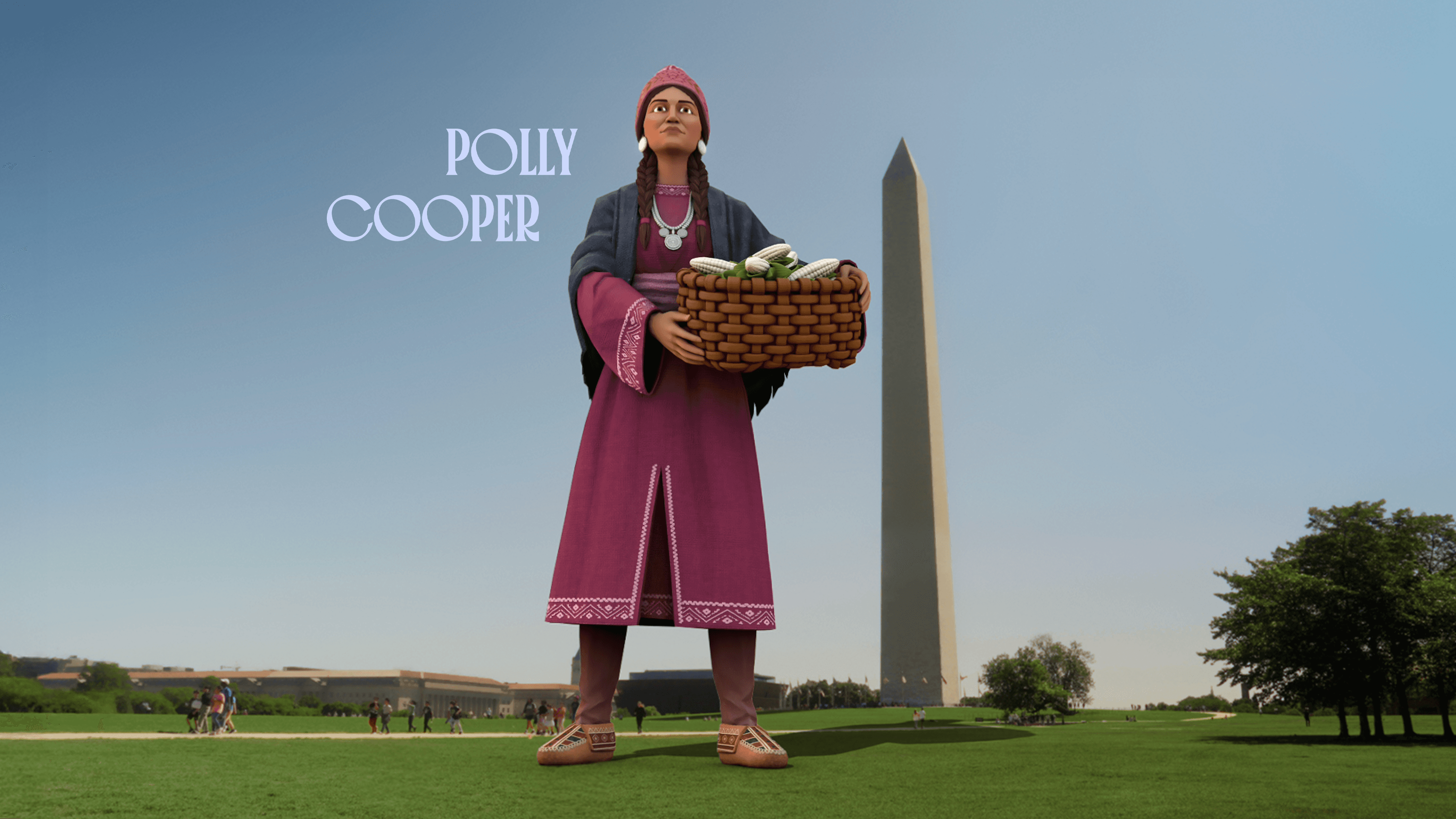
As the American colonists began to rebel against the British, members of the Oneida Tribe recognized a new ally. Though part of the Haudenosaunee (Iroquois) Confederacy, which had formally sided with the British after the French & Indian War, the Oneida had recently suffered under their rule. They had lost a portion of their land and their sovereignty at the hands of the Crown and saw a kindred spirit in the Americans’ fight for freedom.¹
Having heard of the Continental Army’s suffering at Valley Forge, Chief Skenandoah sent a party of 47 warriors to Pennsylvania with bushels of white corn. Among them was Polly Cooper, an Oneida woman.² Arriving at the camp in May 1778 after traveling hundreds of miles, Cooper taught the starving soldiers how to prepare the corn properly in a nutritious way. She helped them forage for nuts and berries, and cook soup, cornbread, and mash to create more balanced meals.³ According to oral tradition, she also tended to the sick, and carried water to soldiers on the battlefield, regardless of the color of their uniform. Her help was greatly appreciated by the Continental Army, but Cooper refused to take money for her services, claiming it had been her moral duty to help. In lieu of money, it is said that Martha Washington or other wives in the camp gifted Cooper a black bonnet and shawl.⁴
Today, Cooper’s shawl remains in the care of her descendants, and though much of her story relies on oral tradition, she is remembered as brave, selfless, and wise—a true representative of the Oneida matrilineal culture and alliance with early Americans.⁵ A bronze statue of Cooper alongside Chief Skenandoah and George Washington within the National Museum of the American Indian celebrates her contributions to the Revolutionary War and this early relationship between peoples.⁶
William Sawyer, “The Oneida Nation in the American Revolution,” National Park Service, July 28, 2025, nps.gov/articles/the-oneida-nation-in-the-american-revolution.htm.
American Battlefield Trust, “Polly Cooper,” www.battlefields.org/learn/biographies/polly-cooper.
Kandice Watson, “Polly Cooper: From Humble Cook to Oneida Icon,” Oneida Indian Nation, www.oneidaindiannation.com/polly-cooper-from-cook-to-oneida-icon/.
William Rockwell, “The Polly Cooper Shawl: Testimony to a Pact of the Revolutionary War,” Oneida Indian Nation, February 5, 2023 www.oneidaindiannation.com/the-polly-cooper-shawl-testimony-to-a-pact-of-the-revolutionary-war/.
Rockwell, “The Polly Cooper Shawl”.
Dennis Zotigh, “A Light at the Museum: Bringing a Massive Bronze to Life,” American Indian 18, no. 3 (2017), www.americanindianmagazine.org/story/light-museum-bringing-massive-bronze-life.
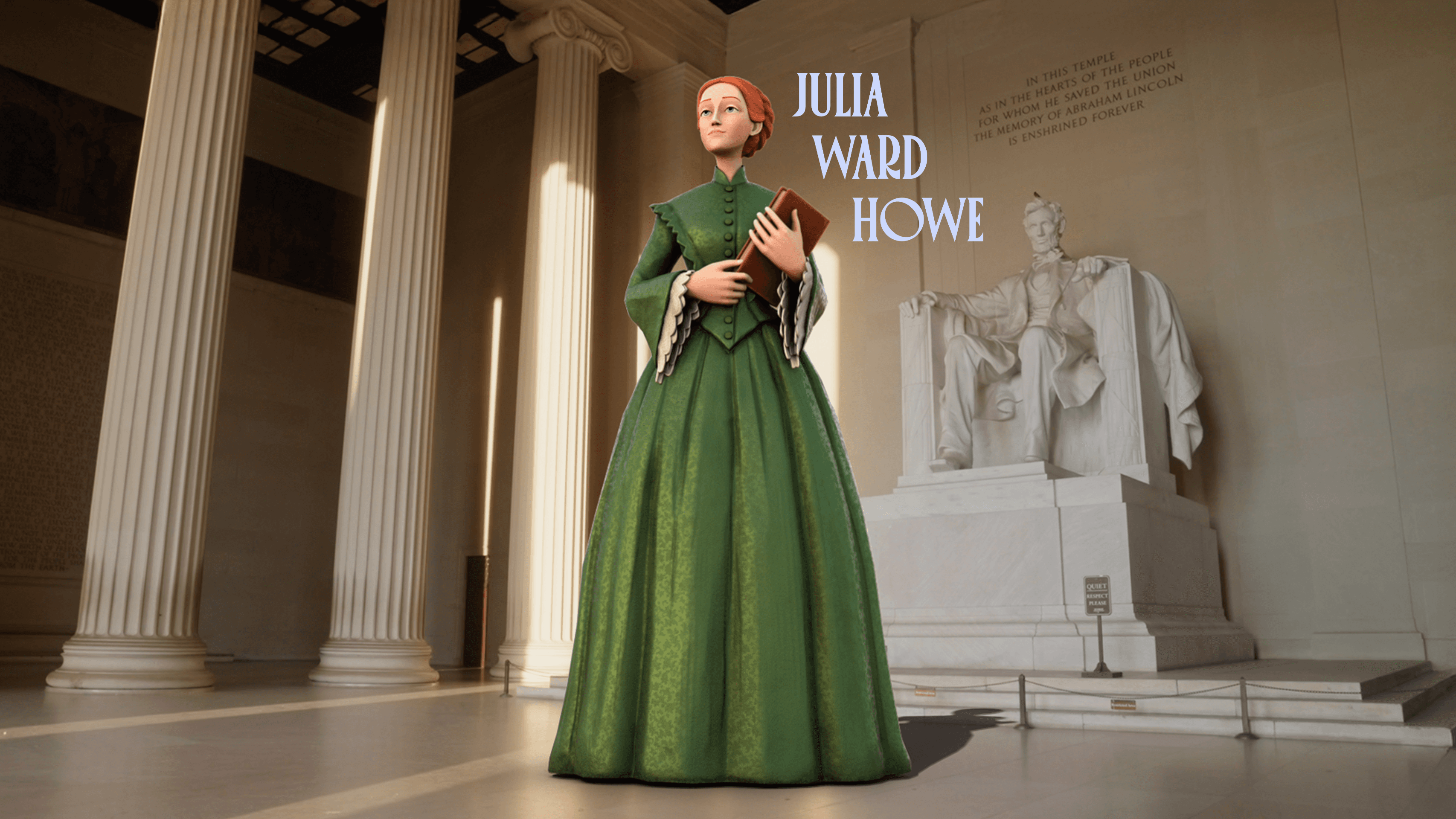
Born in New York City, Julia Ward Howe enjoyed a privileged but strict religious upbringing enforced by her widowed father.¹ Although limited first by her father’s authority and, later, her husband’s, Howe developed a love for reading and writing and was a New York socialite who interacted with some of the leading minds of the time. In 1854, she defied her husband Samuel’s decree to neither publish nor work outside the home by publishing a book of poems that spoke candidly about infidelity and challenged the societal norms of the day.² Eventually, they reached an uneasy truce, as her work writing and editing was essential to his abolitionist newspaper, the Commonwealth.³
After visiting Washington, DC in 1861 to meet President Lincoln and observe the war effort, Howe allegedly awoke in the night with verses in her mind and jumped from bed to record them.⁴ The following year, Atlantic Monthly published “The Battle Hymn of the Republic,” elevating Howe and her work to the national stage. Howe intended the hymn to motivate the Union to, with the help of God, win the Civil War and free enslaved peoples across the country.⁵ The hymn was quickly adopted as the Union’s unofficial song and Howe became one of the most well-known women in America.
In the years after the Civil War, Howe dedicated herself to women’s suffrage, founding multiple groups, which ultimately culminated in the National American Woman’s Suffrage Association.⁶ Her work laid the foundation for the passage of the 19th Amendment in 1920. In addition to her activism, Howe continued to write, eventually becoming the first woman elected to the American Academy of Arts and Letters.⁷ “The Battle Hymn of the Republic” was adopted by members of the women’s suffrage movement and the Civil Rights Movement.⁸ Whether in prose or in song, her words continued to inspire change long after her death.
Boston National Historical Park, “Julia Ward Howe,” National Park Service, nps.gov/people/julia-ward-howe.htm.
“Julia Ward Howe: Biography,” Julia Ward Howe, www.juliawardhowe.org/bio.htm.
“Julia Ward Howe,” Poetry Foundation, www.poetryfoundation.org/poets/julia-ward-howe.
“Julia Ward Howe,” NPS.
“Julia Ward Howe,” Poetry Foundation.
“Julia Ward Howe,” Poetry Foundation.
“Julia Ward Howe,” NPS.
“Julia Ward Howe,” Poetry Foundation.
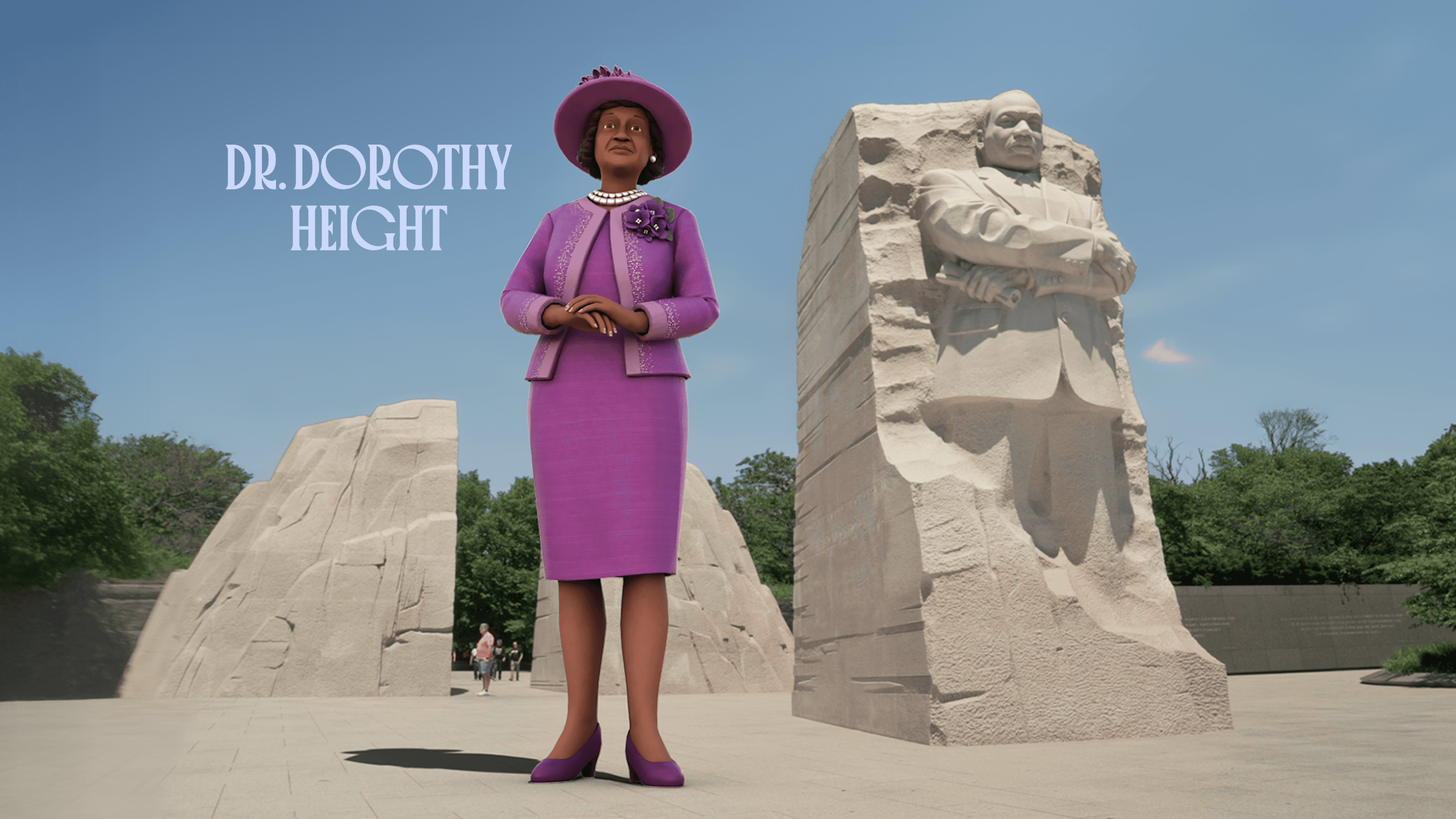
“We must not lose sight of the quiet revolution that women are involved in”.¹
Dorothy Height began her career in 1937 at the Harlem YWCA, where she met Mary McLeod Bethune and stepped into a lifetime of activism.² She rose quickly within the organization, becoming an executive that same year before moving to the National YWCA office, where she built the YWCA’s diversity and racial justice programs and led the integration of all YWCA centers.³ She later founded and directed the YWCA’s Center for Racial Justice.⁴
In 1957, Height became president of the National Council of Negro Women (NCNW), a post she held for forty years. Under her leadership, the NCNW became a significant advocacy group, with Height frequently appearing before Congress, attending meetings, and supporting integration efforts across the country throughout the 1960s.⁵ She joined the planning committee for the 1963 March on Washington as the only woman, and the only volunteer, on its leadership council.⁶ Despite her role in organizing the march, and her repeated requests for women speakers, Height was not invited to speak from the stage. She saw it as a deliberate exclusion of women’s contributions to the movement.⁷
That exclusion became a turning point. Height, with Polly Cowan, convened a meeting titled “After the March, What?” to focus on advancing women’s roles within the movement. The conversation set off a chain of meetings that eventually led to the founding of the National Organization for Women.⁸
In the summer of 1964, Height and Cowan organized Wednesdays in Mississippi (WIMS), sending interracial teams of women into the state during Freedom Summer to support local communities and open dialogue across racial lines. It was the only civil rights program of its kind organized by women, for women, under a national women’s organization.⁹ President Bush awarded Height with the Congressional Gold Medal in 2004. By the time of her death in 2010, Height had spent nearly seven decades building the organizations and alliances that still anchor civil rights and women's advocacy today.
Dorothy Height, Open Wide The Freedom Gates: A Memoir (New York, NY: PublicAffairs Books, 2003).
Martin Luther King, Jr. National Historic Site, “International Civil Rights Hall of Fame: Dorothy Height,” National Park Service, nps.gov/features/malu/feat0002/wof/Dorothy_Height.htm.
“The Legacy of Dorothy Height,” The National Center for Civil and Human Rights, www.civilandhumanrights.org/fw-dorothy-height/.
“The Legacy of Dorothy Height,” The National Center for Civil and Human Rights.
Height, Open Wide the Freedom Gates.
Santi Elijah Holley, “The woman who quietly changed the face of the civil rights movement,” National Geographic, February 26, 2026, www.nationalgeographic.com/history/article/dorothy-height-godmother-civil-rights-movement.
Carol Giardina, “MOW to NOW: Black Feminism Resets the Chronology of the Founding of Modern Feminism,” Feminist Studies 44, no. 3 (2018): 736–765, www.jstor.org/stable/10.15767/feministstudies.44.3.0736.
Giardina, “MOW to NOW”.
Debbie Z. Harwell, “Wednesdays in Mississippi: Uniting Women across Regional and Racial Lines, Summer 1964,” The Journal of Southern History 76, no. 3 (2010): 617–654, www.jstor.org/stable/25700142.
Raised in Indiana, Elizebeth Smith Friedman studied English literature in college, despite her father’s disapproval of her attendance, and developed a love of Shakespeare.¹ In the summer of 1916, during a visit to the Newberry Library to view an original Shakespeare folio and apply for jobs, a librarian put her in contact with George Fabyn. Fabyn, a millionaire funding his own think tank, hired her to help prove that FrancisBacon authored Shakespeare’s works.² While the theory was disproved, Friedman’s passion for cryptanalysis had just begun.
Following the interception of the Zimmerman Telegram during World War I, the need for code breakers became a top priority. For eight months, Friedman and the small team in Fabyn’s lab completed all codebreaking for the entire United States government, creating the foundation for codebreaking still used today.³ After the war, Friedman was called back into action by the U.S. Coast Guard. Amid prohibition, the Coast Guard was responsible for patrolling the Atlantic Coast for “rumrunners” and needed her help deciphering their secret radio messages.⁴ Not only did she help decipher the code, she served as an expert witness against some of the largest rumrunners of the time and trained other Coast Guard members in cryptology.⁵
As World War II loomed, Friedman transferred to the Treasury Department where she discovered communications between Germany and Mexico concerning shipping routes used by United States and British and was among the first to learn about Germany’s Enigma machine.⁶ She and her unit also began practicing top-secret counterespionage and counterintelligence. By the end of the war, she decrypted 4,000 typed messages, mastered 48 separate radio circuits and three Enigma machines, all vital to America’s defeat of the Nazis, particularly in South America.⁷
Despite taking many of her stories and work to the grave to protect American lives, Elizebeth Smith Friedman’s contributions to the United States’ victory in both World Wars and to the field of cryptology cannot be understated. She may have been America’s first woman cryptanalyst, but her work ensured she would not be the last.
Ann Todd, “The Mother of Cryptology,” Naval History 36, no. 2 (2022), www.usni.org/magazines/naval-history-magazine/2022/april/mother-cryptology.
Todd, “The Mother of Cryptology”.
Todd, “The Mother of Cryptology”.
“Elizebeth Friedman,” The Mob Museum, themobmuseum.org/notable_names/elizebeth-friedman/.
“Elizebeth Friedman,” The Mob Museum.
Todd, “Mother of Cryptology.”
Suyin Haynes, “How America’s ‘First Female Cryptanalyst’ Cracked the Code of Nazi Spies in World War II—and Never Lived to See the Credit,” TIME, January 11, 2021, time.com/5928583/elizebeth-friedman-codebreaker/.
Mary Katharine Goddard’s name is the only woman’s name that appears on the printed Declaration of Independence. Mary Katharine Goddard was not a signer, she was a printer to the Continental Congress.
In 1773, Mary Katharine took over the family printing business started by her brother. After a move to Baltimore, Mary Katharine began printing the Maryland Journal just as the colonists’ anger at British rule surged toward revolution. By June 1774, she was publishing reports on Britain’s blockade of Boston Harbor.
She was named postmaster of Baltimore in July 1775, which made her the first postmaster of Baltimore, and quite possibly the first female government employee for the United States. In 1776, when the Continental Congress relocated to Baltimore, just blocks from Goddard's printing office she became the official printer to the Continental Congress and a proud supporter of the American cause.
She printed Congressional resolutions and notices as well as the Declaration of Independence with the signer’s names. Goddard's imprint at the bottom of the document identifies her full name and location: "Baltimore, in Maryland: Printed by Mary Katharine Goddard.”
Goddard left her mark—literally—as one of the Revolutionary era’s most accomplished publishers and a pioneer in the U.S. government.
Visit unhidden-heroines.com or scan the QR code below on your smartphone to begin. Once the experience loads, move your phone around the space to see the women and related artifacts come to life in augmented reality. No app download is required. Each individual experience takes approximately five minutes to complete.

The experience is available on-site and remotely from anywhere in the country through December 31, 2026.
Unhidden Heroines imagines landmarks dedicated to women’s history in the heart of our nation, celebrating the unsung achievements of five remarkable American women on the National Mall and beyond!
'Unhidden Heroines' by Smithsonian American Women's History Museum
Image courtesy of the Smithsonian American Women’s History Museum.
In celebration of America’s 250th anniversary, the Smithsonian American Women’s History Museum launched Unhidden Heroines, an augmented reality experience that brings stories of women who shaped American history to life at five of the monuments and memorials on the National Mall.
Visitors to the National Mall can enjoy “Unhidden Heroines” by holding their smartphones or tablets up to each monument or memorial for the stories to appear on screen. Audiences can also explore the experience remotely from any location in either at-home AR or static non-interactive formats.
Through geolocation, original illustrations, custom sound, and interactive elements, visitors can step into the worlds of Mary Katharine Goddard, Dorothy Height, Julia Ward Howe, Elizebeth Smith Friedman, and Polly Cooper.
Meet the women:
As the American colonists began to rebel against the British, members of the Oneida Tribe recognized a new ally. Though part of the Haudenosaunee (Iroquois) Confederacy, which had formally sided with the British after the French & Indian War, the Oneida had recently suffered under their rule. They had lost a portion of their land and their sovereignty at the hands of the Crown and saw a kindred spirit in the Americans’ fight for freedom.¹
Having heard of the Continental Army’s suffering at Valley Forge, Chief Skenandoah sent a party of 47 warriors to Pennsylvania with bushels of white corn. Among them was Polly Cooper, an Oneida woman.² Arriving at the camp in May 1778 after traveling hundreds of miles, Cooper taught the starving soldiers how to prepare the corn properly in a nutritious way. She helped them forage for nuts and berries, and cook soup, cornbread, and mash to create more balanced meals.³ According to oral tradition, she also tended to the sick, and carried water to soldiers on the battlefield, regardless of the color of their uniform. Her help was greatly appreciated by the Continental Army, but Cooper refused to take money for her services, claiming it had been her moral duty to help. In lieu of money, it is said that Martha Washington or other wives in the camp gifted Cooper a black bonnet and shawl.⁴
Today, Cooper’s shawl remains in the care of her descendants, and though much of her story relies on oral tradition, she is remembered as brave, selfless, and wise—a true representative of the Oneida matrilineal culture and alliance with early Americans.⁵ A bronze statue of Cooper alongside Chief Skenandoah and George Washington within the National Museum of the American Indian celebrates her contributions to the Revolutionary War and this early relationship between peoples.⁶
William Sawyer, “The Oneida Nation in the American Revolution,” National Park Service, July 28, 2025, nps.gov/articles/the-oneida-nation-in-the-american-revolution.htm.
American Battlefield Trust, “Polly Cooper,” www.battlefields.org/learn/biographies/polly-cooper.
Kandice Watson, “Polly Cooper: From Humble Cook to Oneida Icon,” Oneida Indian Nation, www.oneidaindiannation.com/polly-cooper-from-cook-to-oneida-icon/.
William Rockwell, “The Polly Cooper Shawl: Testimony to a Pact of the Revolutionary War,” Oneida Indian Nation, February 5, 2023 www.oneidaindiannation.com/the-polly-cooper-shawl-testimony-to-a-pact-of-the-revolutionary-war/.
Rockwell, “The Polly Cooper Shawl”.
Dennis Zotigh, “A Light at the Museum: Bringing a Massive Bronze to Life,” American Indian 18, no. 3 (2017), www.americanindianmagazine.org/story/light-museum-bringing-massive-bronze-life.
Born in New York City, Julia Ward Howe enjoyed a privileged but strict religious upbringing enforced by her widowed father.¹ Although limited first by her father’s authority and, later, her husband’s, Howe developed a love for reading and writing and was a New York socialite who interacted with some of the leading minds of the time. In 1854, she defied her husband Samuel’s decree to neither publish nor work outside the home by publishing a book of poems that spoke candidly about infidelity and challenged the societal norms of the day.² Eventually, they reached an uneasy truce, as her work writing and editing was essential to his abolitionist newspaper, the Commonwealth.³
After visiting Washington, DC in 1861 to meet President Lincoln and observe the war effort, Howe allegedly awoke in the night with verses in her mind and jumped from bed to record them.⁴ The following year, Atlantic Monthly published “The Battle Hymn of the Republic,” elevating Howe and her work to the national stage. Howe intended the hymn to motivate the Union to, with the help of God, win the Civil War and free enslaved peoples across the country.⁵ The hymn was quickly adopted as the Union’s unofficial song and Howe became one of the most well-known women in America.
In the years after the Civil War, Howe dedicated herself to women’s suffrage, founding multiple groups, which ultimately culminated in the National American Woman’s Suffrage Association.⁶ Her work laid the foundation for the passage of the 19th Amendment in 1920. In addition to her activism, Howe continued to write, eventually becoming the first woman elected to the American Academy of Arts and Letters.⁷ “The Battle Hymn of the Republic” was adopted by members of the women’s suffrage movement and the Civil Rights Movement.⁸ Whether in prose or in song, her words continued to inspire change long after her death.
Boston National Historical Park, “Julia Ward Howe,” National Park Service, nps.gov/people/julia-ward-howe.htm.
“Julia Ward Howe: Biography,” Julia Ward Howe, www.juliawardhowe.org/bio.htm.
“Julia Ward Howe,” Poetry Foundation, www.poetryfoundation.org/poets/julia-ward-howe.
“Julia Ward Howe,” NPS.
“Julia Ward Howe,” Poetry Foundation.
“Julia Ward Howe,” Poetry Foundation.
“Julia Ward Howe,” NPS.
“Julia Ward Howe,” Poetry Foundation.
“We must not lose sight of the quiet revolution that women are involved in”.¹
Dorothy Height began her career in 1937 at the Harlem YWCA, where she met Mary McLeod Bethune and stepped into a lifetime of activism.² She rose quickly within the organization, becoming an executive that same year before moving to the National YWCA office, where she built the YWCA’s diversity and racial justice programs and led the integration of all YWCA centers.³ She later founded and directed the YWCA’s Center for Racial Justice.⁴
In 1957, Height became president of the National Council of Negro Women (NCNW), a post she held for forty years. Under her leadership, the NCNW became a significant advocacy group, with Height frequently appearing before Congress, attending meetings, and supporting integration efforts across the country throughout the 1960s.⁵ She joined the planning committee for the 1963 March on Washington as the only woman, and the only volunteer, on its leadership council.⁶ Despite her role in organizing the march, and her repeated requests for women speakers, Height was not invited to speak from the stage. She saw it as a deliberate exclusion of women’s contributions to the movement.⁷
That exclusion became a turning point. Height, with Polly Cowan, convened a meeting titled “After the March, What?” to focus on advancing women’s roles within the movement. The conversation set off a chain of meetings that eventually led to the founding of the National Organization for Women.⁸
In the summer of 1964, Height and Cowan organized Wednesdays in Mississippi (WIMS), sending interracial teams of women into the state during Freedom Summer to support local communities and open dialogue across racial lines. It was the only civil rights program of its kind organized by women, for women, under a national women’s organization.⁹ President Bush awarded Height with the Congressional Gold Medal in 2004. By the time of her death in 2010, Height had spent nearly seven decades building the organizations and alliances that still anchor civil rights and women's advocacy today.
Dorothy Height, Open Wide The Freedom Gates: A Memoir (New York, NY: PublicAffairs Books, 2003).
Martin Luther King, Jr. National Historic Site, “International Civil Rights Hall of Fame: Dorothy Height,” National Park Service, nps.gov/features/malu/feat0002/wof/Dorothy_Height.htm.
“The Legacy of Dorothy Height,” The National Center for Civil and Human Rights, www.civilandhumanrights.org/fw-dorothy-height/.
“The Legacy of Dorothy Height,” The National Center for Civil and Human Rights.
Height, Open Wide the Freedom Gates.
Santi Elijah Holley, “The woman who quietly changed the face of the civil rights movement,” National Geographic, February 26, 2026, www.nationalgeographic.com/history/article/dorothy-height-godmother-civil-rights-movement.
Carol Giardina, “MOW to NOW: Black Feminism Resets the Chronology of the Founding of Modern Feminism,” Feminist Studies 44, no. 3 (2018): 736–765, www.jstor.org/stable/10.15767/feministstudies.44.3.0736.
Giardina, “MOW to NOW”.
Debbie Z. Harwell, “Wednesdays in Mississippi: Uniting Women across Regional and Racial Lines, Summer 1964,” The Journal of Southern History 76, no. 3 (2010): 617–654, www.jstor.org/stable/25700142.
Raised in Indiana, Elizebeth Smith Friedman studied English literature in college, despite her father’s disapproval of her attendance, and developed a love of Shakespeare.¹ In the summer of 1916, during a visit to the Newberry Library to view an original Shakespeare folio and apply for jobs, a librarian put her in contact with George Fabyn. Fabyn, a millionaire funding his own think tank, hired her to help prove that FrancisBacon authored Shakespeare’s works.² While the theory was disproved, Friedman’s passion for cryptanalysis had just begun.
Following the interception of the Zimmerman Telegram during World War I, the need for code breakers became a top priority. For eight months, Friedman and the small team in Fabyn’s lab completed all codebreaking for the entire United States government, creating the foundation for codebreaking still used today.³ After the war, Friedman was called back into action by the U.S. Coast Guard. Amid prohibition, the Coast Guard was responsible for patrolling the Atlantic Coast for “rumrunners” and needed her help deciphering their secret radio messages.⁴ Not only did she help decipher the code, she served as an expert witness against some of the largest rumrunners of the time and trained other Coast Guard members in cryptology.⁵
As World War II loomed, Friedman transferred to the Treasury Department where she discovered communications between Germany and Mexico concerning shipping routes used by United States and British and was among the first to learn about Germany’s Enigma machine.⁶ She and her unit also began practicing top-secret counterespionage and counterintelligence. By the end of the war, she decrypted 4,000 typed messages, mastered 48 separate radio circuits and three Enigma machines, all vital to America’s defeat of the Nazis, particularly in South America.⁷
Despite taking many of her stories and work to the grave to protect American lives, Elizebeth Smith Friedman’s contributions to the United States’ victory in both World Wars and to the field of cryptology cannot be understated. She may have been America’s first woman cryptanalyst, but her work ensured she would not be the last.
Ann Todd, “The Mother of Cryptology,” Naval History 36, no. 2 (2022), www.usni.org/magazines/naval-history-magazine/2022/april/mother-cryptology.
Todd, “The Mother of Cryptology”.
Todd, “The Mother of Cryptology”.
“Elizebeth Friedman,” The Mob Museum, themobmuseum.org/notable_names/elizebeth-friedman/.
“Elizebeth Friedman,” The Mob Museum.
Todd, “Mother of Cryptology.”
Suyin Haynes, “How America’s ‘First Female Cryptanalyst’ Cracked the Code of Nazi Spies in World War II—and Never Lived to See the Credit,” TIME, January 11, 2021, time.com/5928583/elizebeth-friedman-codebreaker/.
Mary Katharine Goddard’s name is the only woman’s name that appears on the printed Declaration of Independence. Mary Katharine Goddard was not a signer, she was a printer to the Continental Congress.
In 1773, Mary Katharine took over the family printing business started by her brother. After a move to Baltimore, Mary Katharine began printing the Maryland Journal just as the colonists’ anger at British rule surged toward revolution. By June 1774, she was publishing reports on Britain’s blockade of Boston Harbor.
She was named postmaster of Baltimore in July 1775, which made her the first postmaster of Baltimore, and quite possibly the first female government employee for the United States. In 1776, when the Continental Congress relocated to Baltimore, just blocks from Goddard's printing office she became the official printer to the Continental Congress and a proud supporter of the American cause.
She printed Congressional resolutions and notices as well as the Declaration of Independence with the signer’s names. Goddard's imprint at the bottom of the document identifies her full name and location: "Baltimore, in Maryland: Printed by Mary Katharine Goddard.”
Goddard left her mark—literally—as one of the Revolutionary era’s most accomplished publishers and a pioneer in the U.S. government.
Visit unhidden-heroines.com or scan the QR code below on your smartphone to begin. Once the experience loads, move your phone around the space to see the women and related artifacts come to life in augmented reality. No app download is required. Each individual experience takes approximately five minutes to complete.
The experience is available on-site and remotely from anywhere in the country through December 31, 2026.
Unhidden Heroines imagines landmarks dedicated to women’s history in the heart of our nation, celebrating the unsung achievements of five remarkable American women on the National Mall and beyond!
5
Sites
3.2 hr
Est. trip duration
0.7 hr
Est. walking time
2.3 mi
Distance