Early life & career
Born on February 27, 1897, in Philadelphia, Marian Anderson had a penchant for music at an early age—joining the Union Baptist Church Choir at the mere age of six! In the following years, she performed locally and gained an appreciation for classical and spiritual music.
Anderson started to receive national acclaim when she partnered with William “Billy” King as her accompanist and manager. Together, the two performed across the South and Midwest at churches and historically black colleges. Her opera career really took off after enrolling in a six-week opera course at the Chicago Conservatory of Music.
Figure 1. Carl Van Vechten, 𝘗𝘰𝘳𝘵𝘳𝘢𝘪𝘵 𝘰𝘧 𝘔𝘢𝘳𝘪𝘢𝘯 𝘈𝘯𝘥𝘦𝘳𝘴𝘰𝘯, photograph, January 14, 1940, Van Vechten Collection, Library of Congress, Washington, DC, www.loc.gov/item/2004662515/.
A couple notable highlights of her early career include being the first African American artist to sign with RCA Victor Recording Company and beating more than 300 competitors to solo with the New York Philharmonic.
Whether she was performing in her home state of Pennsylvania, New York City, or European opera halls, Anderson always made sure to include traditional African American spirituals in her repertoire because she saw the importance of elevating her fellow African Americans’ traditions and culture.
Change of Plans
By 1939, Anderson was an accomplished and international sensation who was helping to usher in a new era for African American singers. However, little did she know that Howard University’s invitation to perform in Washington D.C. would lead to a career-defining moment—but not the one she anticipated.
The only auditorium in Washington, D.C. large enough to house Anderson’s many dedicated fans was Constitution Hall, run by the Daughters of the American Revolution (DAR). The DAR denied her performance based on segregation policies.
Thanks to Walter White, executive secretary of the National Association for the Advancement of Colored People (NAACP), along with Secretary of the Interior Harold Ickes and others, Anderson was promptly invited to perform on the Lincoln Memorial steps.
The concert that awakened America
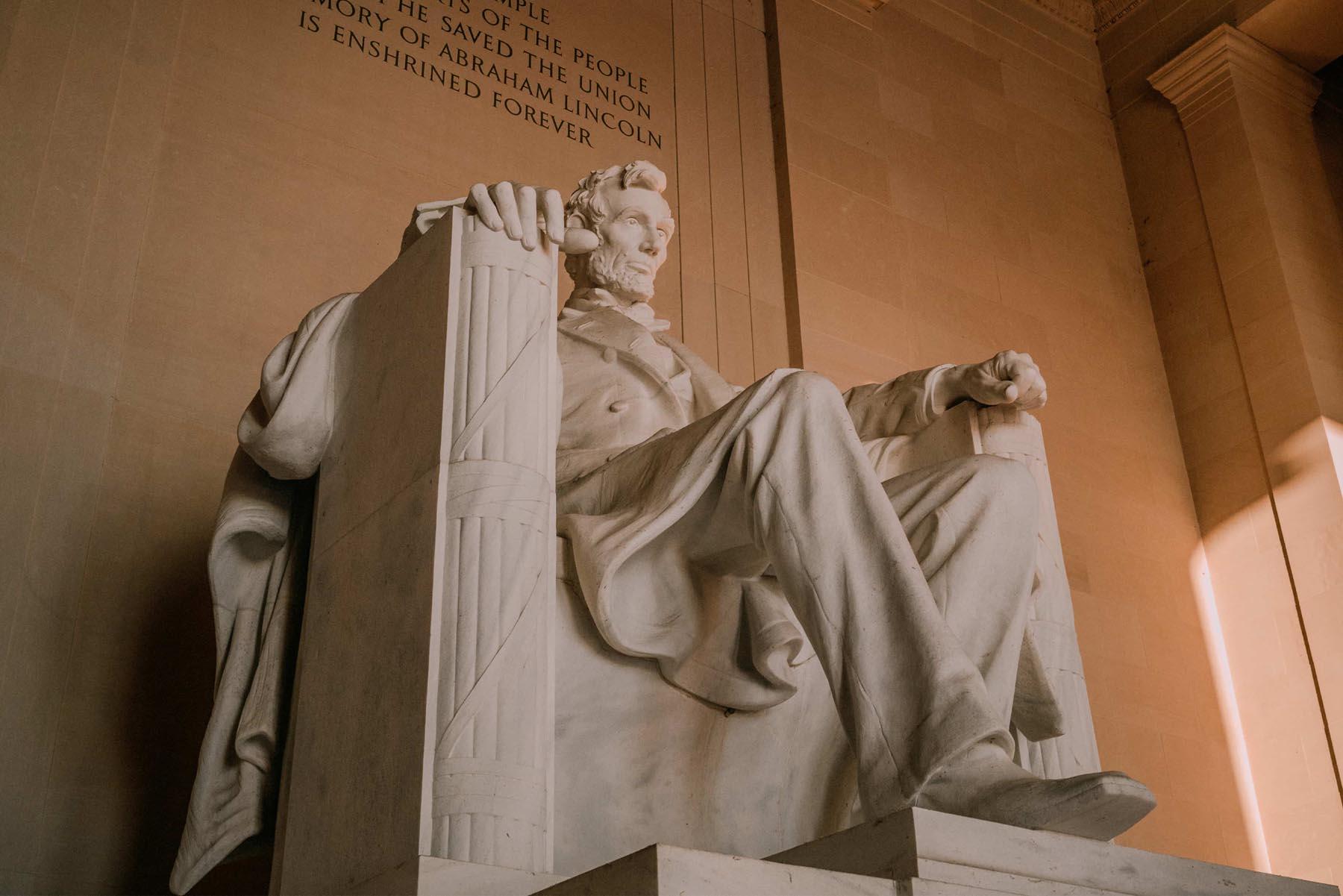
On April 9, 1939, Anderson stood in front of the Lincoln Memorial in a mink coat and looked out at the largest crowd she had ever faced.
Though she was nervous, she confidently marched to the microphone and wowed a diverse crowd of 75,000 people with her first song, My Country ‘Tis of Thee. (Little-known fact: She slightly altered the lyrics from “Of thee I sing” to “To thee we sing.”) She then went on to perform six more songs, which were all broadcast nationwide by NBC radio.
Tuning into that broadcast was a 10-year-old boy, Martin Luther King Jr.! Anderson’s performance made such an impact the future visionary that he would eventually invite her to perform “He’s Got the Whole World in His Hands” after his iconic “I Have a Dream” speech in 1963.
“I as an individual was not important on that day. It happened to be the people whom I represented. I think if you have something to offer which can help a situation, then I think you should do it in your own manner.”
—Marian Anderson
Later years & legacy
Outside of these iconic National Mall moments, Anderson had many other achievements, including a debut at the Metropolitan Opera in 1955, a world tour on behalf of the United States in 1957, and performances at Presidents Eisenhower's and Kennedy's inaugurations.
She eventually retired to Oregon where she lived until the age of 96—and her legacy can still be felt today.
Anderson’s iconic Lincoln Memorial performance proved to be pivotal in helping break down barriers in the face of racial discrimination. Though she wasn’t an activist by nature, she became an important figure in the fight for Civil Rights and serves as an inspiration for many today.