A child looking at the painting at the exhibit.
Courtesy of the National Park Service.
In the spring of 1989, a history teacher named John Calvin brought a group of students from Saguaro High School in Scottsdale, Arizona, to Washington, DC. They were there to attend a program with Close Up, an organization which gathers students from all over the country to experience how their government works. For one week with Close Up, they learned about their rights and responsibilities as citizens, and how to use those rights to make a difference.
On the group's free day during the Close Up program, they visited the Lincoln Memorial; Mr. Calvin's students stood on the steps and wanted to know exactly where Dr. Martin Luther King Jr. had given his famous “I Have a Dream” speech on August 28, 1963. When they found the spot, they noticed something was missing—nothing marked it. They asked their teacher why, and he didn’t have an answer.
The Scottsdale Six
Six students—Lizz Cohen, Carol Bien-Willner, Carol Mack, Jaime Lewis, Ailene Mass, and Heidi Sherman—became known as the “Scottsdale Six.” They decided to use the citizenship skills they had practiced with Close Up to try to make a difference. Their first idea was to place a small bronze plaque on the steps where Dr. King once stood. They wanted to pay for it with pennies collected by students across the country.¹
They started a national campaign called “Pennies Make a Monumental Difference.” The penny was more than a way to raise money. It was a symbol. The students wanted young Americans to see that their rights are just like pennies lying on the ground. If they are left unused, they are worthless. But, as they had learned, if people decide to pick up their rights and work with others, they can accomplish great things.²
Before long, about two million students were collecting coins. The American Federation of Teachers, a national teachers’ union, helped out with office space, phones, and mailing lists.
A Setback and a New Approach
Then, the students hit a wall. A federal law called the Commemorative Works Act says you cannot add a new memorial or marker on top of an existing one. The plaque idea was dead.
But the students didn’t quit. They learned that the National Park Service was already planning to repair and improve the memorial, and they insisted on joining the design team.
Seventeen students traveled to the NPS design center in Harpers Ferry, West Virginia. In four days, they planned a mini museum in the Memorial’s basement, with marble tablets carved with Lincoln’s words and a theater showing photos and film of the speeches and marches held there. They received advice from professional designers, but the students took on most of the planning themselves.
The students had raised about sixty-two thousand dollars, but the museum project cost much more. So, they flew back to Washington. Having already once walked the halls of Congress with Close Up, they spent four days knocking on doors at the Capitol—a trip they called the “Capitol Hill Climb.” Eventually, Congress agreed to pay the rest.³ Their work even reached the floor of the House, where Rep. Jon Kyl of Arizona praised the students and shared their motto: “What Lincoln started, and King advanced, let all Americans finish”.⁴
A Lasting Legacy
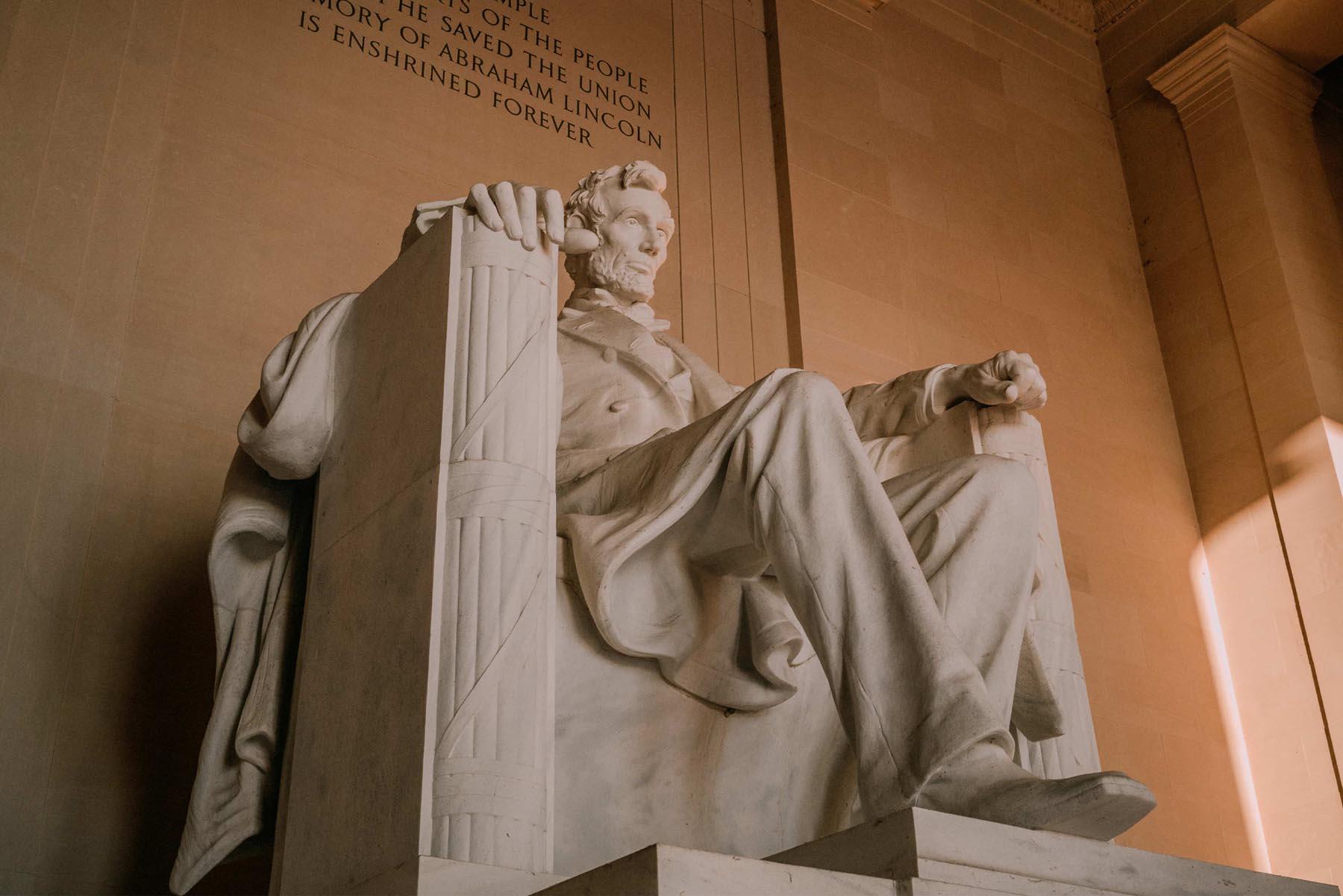
A museum installation pairs a large portrait of Abraham Lincoln with a quotation highlighting his enduring influence on the nation.
Courtesy of the National Park Service
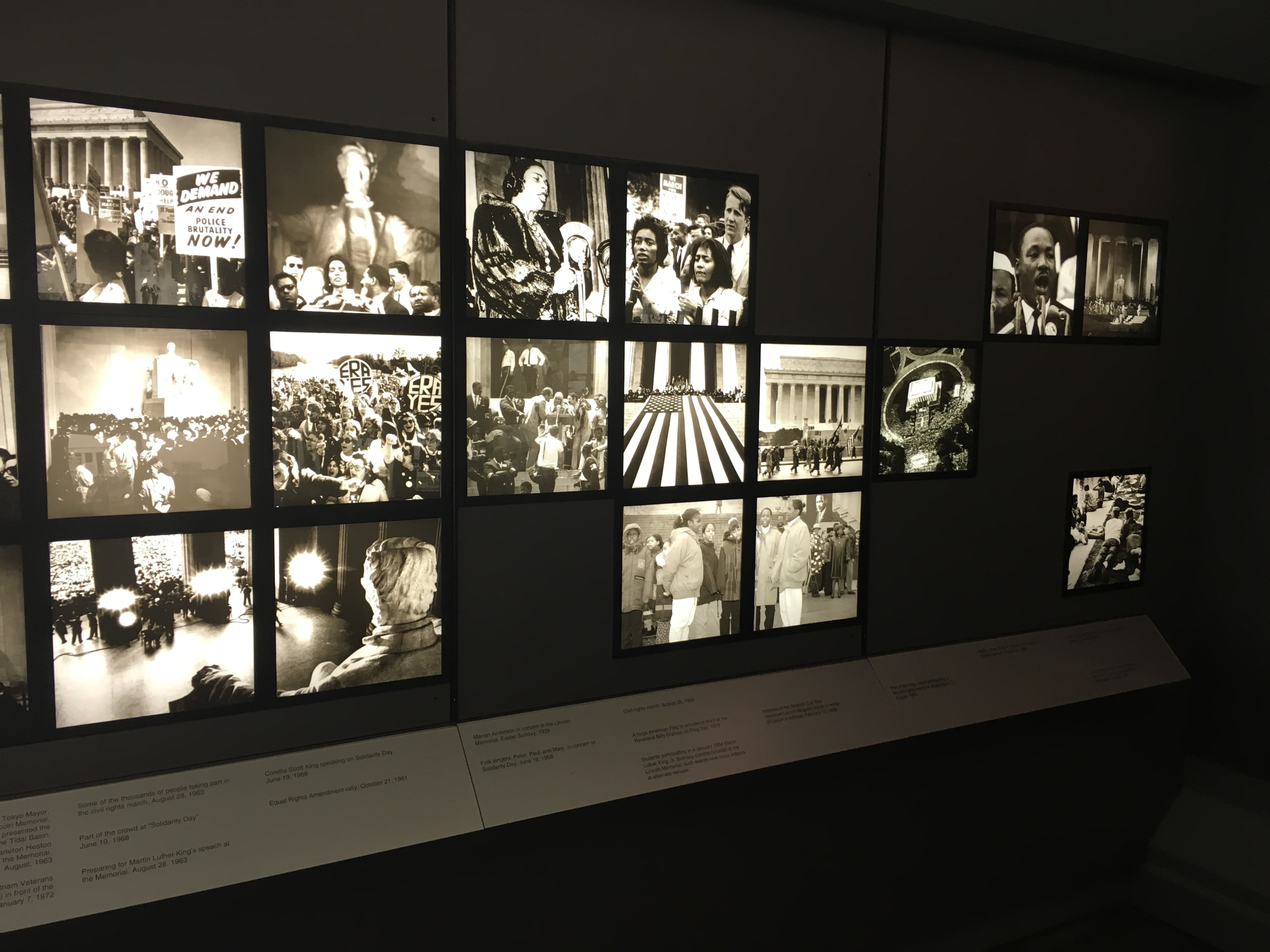
Historic photographs document major events and public gatherings at the Lincoln Memorial, illustrating the monument's role as a national stage for ceremonies, speeches, and civic movements.
Courtesy of the National Park Service.
In September 1994, the “Legacy of Lincoln” exhibit opened. It showed how the Memorial became a gathering place for Americans seeking their civil rights, from Marian Anderson’s 1939 concert to the 1963 March on Washington.
At last, Dr. King had a place there. His wife, Coretta Scott King, wrote to the students: “Like Dr. King, you have strived to dream and to prove great dreams can come to reality.”⁵
An exhibit describing the “Pennies Make a Monumental Difference” campaign, in which students helped support a Lincoln Memorial exhibition, displayed alongside a large replica of the Lincoln Memorial penny and silhouettes representing community participation.
Courtesy of the National Park Service.
“"This exhibit resulted from a 1990 visit to the Lincoln Memorial by Arizona school students who felt the story told here should include events that have taken place here. Lincoln's words and actions inspired many to climb the marble steps, look out over the Reflecting Pool, and speak out for a worthy cause, just as they inspired Dr. Martin Luther King, Jr. on August 28, 1963." ”
—- Exhibit Text
After the Exhibit
The students didn’t stop there. They turned their effort into the National Youth Leadership Center at their school, where a student-run class teaches young people to plan projects, lobby their leaders, and serve their communities.⁶ Their teacher, Mr. Calvin, said his job was to be “a mouse in the corner”—the students led, and the adults supported them.
As one of the Six—Lizz Cohen—said, “If you’re not involved, you’ll never make a change. You can talk about it, but it’s just talk”.⁷
Here is one of the exhibits showing the protests and marches at the Lincoln Memorial.
Epilogue
While the students’ dream of marking the site of Dr. King’s speech was not realized during this movement, the notion of commemorating the speech would arise again in the years ahead. But that is another Mall Moment.