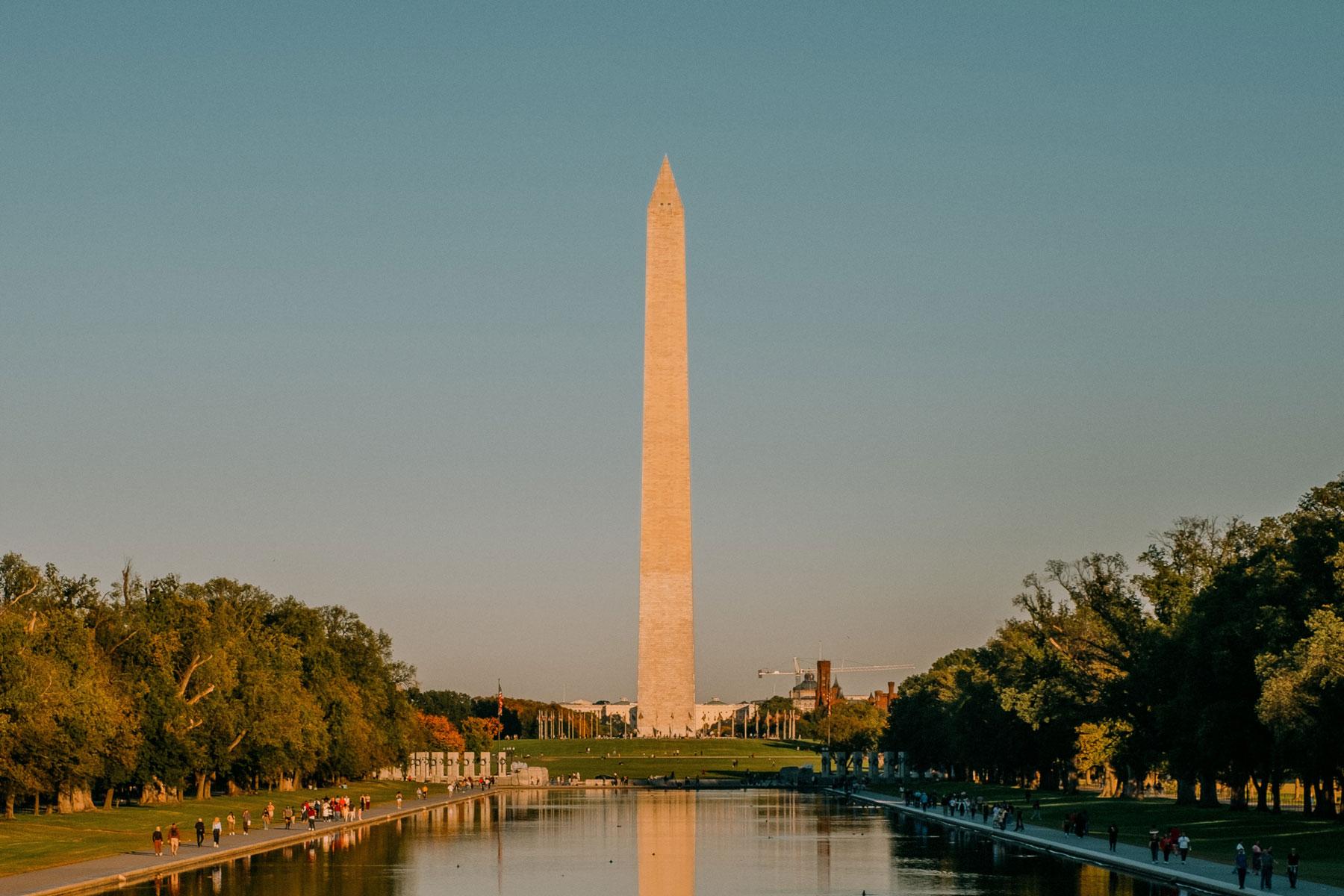
For locals, the National Mall is just as much a place for sports and play as it is for memorials and monuments. On any given day, you might see kickball, football, softball, frisbee, soccer, volleyball, or even pickleball happening on the grass. Kids and adults alike use this shared civic space for fun, fitness, and community. But long before today’s pickup games, the National Mall was also the stage for one of baseball’s most famous and daring moments. In 1908, a player from Washington, DC’s professional baseball team attempted a feat so difficult that many others had tried—and failed—to match it.¹ Before we learn about the catch itself, we need to understand the team, the Washington Monument, and why this challenge captured the nation’s attention.
Baseball Teams in Washington DC
Washington, DC’s current Major League Baseball team, the Washington Nationals, has only called the city home since 2005. Before them, Washington had several important baseball teams, including the Homestead Grays and, most notably, the Washington Senators.²
The Washington Senators became the city’s first major league baseball team in 1901. They played during a time when baseball was quickly becoming America’s most popular sport, and fans packed Griffith Stadium’s stands to watch them compete.³ It was with this team that a bold baseball challenge near the Washington Monument would make history.
Washington Monument
In 1833, a group called the Washington National Monument Society formed with a bold goal: to build a monument honoring George Washington, the nation’s first president. After years of planning and fundraising, the monument’s first cornerstone was laid on July 4, 1848—a symbolic choice tied to Independence Day.⁴
Construction did not go smoothly. As the country moved toward civil war, work on the monument slowed and then stopped entirely.⁵ During the Civil War, the unfinished monument stood surrounded by a very different scene. The land around it was used as a cavalry remount station and even as a cattle slaughterhouse, showing how dramatically the purpose of the space had changed during wartime.⁶
In 1880, construction began again, marked by the laying of a second cornerstone and the start of the monument’s final phase. Five years later, on February 21, 1885—the day before George Washington’s birthday—the Washington Monument was officially dedicated.⁷ Although it was complete and saw significant visitation in its first year, it did not permanently and fully open to the public until October 9, 1888 to incorporate a passenger elevator, among other additions.⁸
As soon as the Monument towered over the city, it sparked imagination beyond history and architecture. Baseball players and fans began asking a daring question: Could anyone catch a baseball dropped from the top? Several attempts were made, but some failed—and others were debated.⁹ The challenge remained unanswered…until one catcher decided to try.
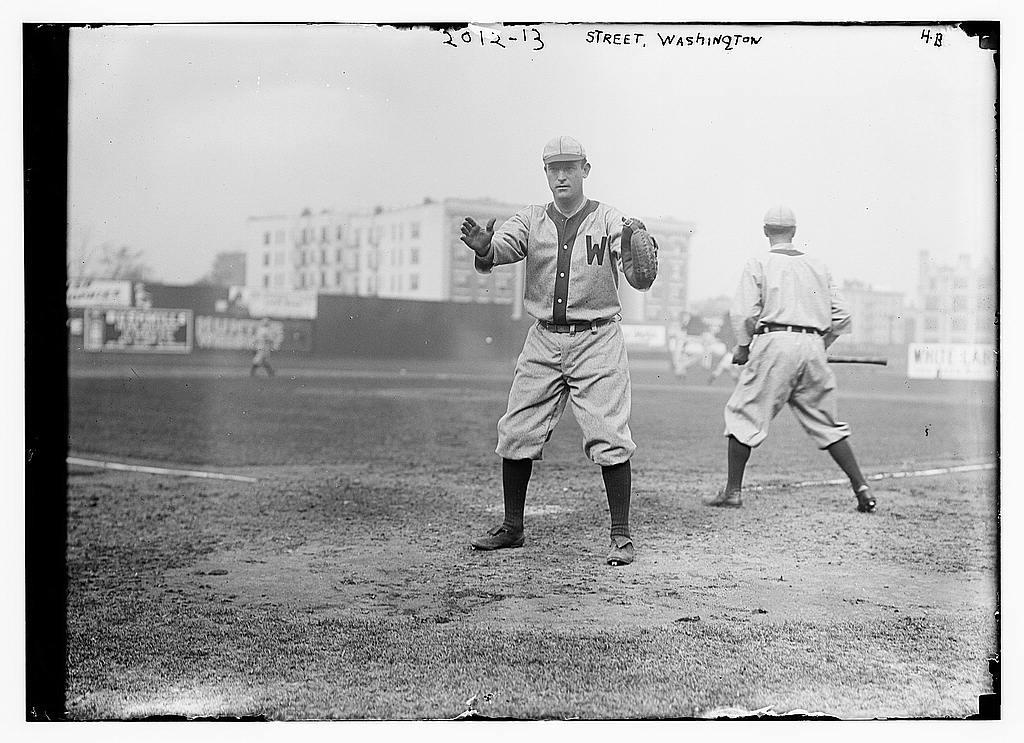
Gabby Street – Early life
Charles Edward Street was a professional baseball player who later became a manager and radio broadcaster in the early 1900s. He was born in Huntsville, Alabama, on September 30, 1882. Street was known by two nicknames—“Gabby” and “Old Sarge.”¹⁰ As a catcher, he stood out not because of his hitting, but because of his defense and his leadership on the field. In fact, historian Joseph Wancho surmises that Gabby would be unknown not for his baseball play at all, but rather this episode in niche sports history, writing "it was outside the white lines of a baseball diamond that brought him the most notoriety."¹¹
In the early 1900s, Street played for several minor league teams before joining the Washington Senators in 1908. While he was not a strong hitter—batting just over .200—he was one of the league’s best defensive catchers. He led the American League in key defensive plays, including putouts and double plays, in both 1908 and 1909.¹² Because of his skill behind the plate and his ability to manage pitchers, Street became the preferred catcher for Walter Johnson, one of the greatest pitchers in baseball history.¹³
““You don’t see Gabby’s kind of a catcher anymore. He never hit much, but what a receiver he was—big fellow, a perfect target, great arm, slow afoot, but spry as a cat on his feet behind the plate, always talking, always hustling, full of pep and fight”.”
—Walter Johnson.¹⁴
The Catch
Two fans of the Washington Senators, Preston Gibson and Josh Biddle, made a bold bet: $500 on whether it was even possible to catch a baseball dropped from the top of the Washington Monument. After securing a special permit, the two climbed to the top of the monument to put the idea to the test.¹⁵ Below them, Gabby Street—dressed in his everyday clothes and holding only his catcher’s glove—took his place near the base of the monument, ready to try the impossible.
The first challenge was simply getting the baseball far enough away from the monument. If the ball struck the stone sides, the attempt wouldn’t count. Gibson and Biddle first tried sliding the ball down a wooden chute, but after ten attempts, the ball kept hitting the monument. Finally, they changed tactics and began taking turns throwing the baseballs out of a window at the top, hoping one would clear the stone tower.
On the fifteenth drop, everything lined up. Gabby Street made the catch.¹⁶
Later, Street explained just how difficult it was. “I didn’t see the ball until it was halfway down,” he said. “It was slanting in the wind, and I knew it would be a hard catch.” Scientists later estimated that the baseball was traveling nearly ninety-five miles per hour and may have struck Street’s glove with a force close to three hundred pounds—making the catch not just impressive, but incredibly dangerous.¹⁷
Other Successful Attempts
A few years later, on a windy day, Billy Sullivan, a player-manager for the Chicago White Sox, attempted the same daring feat. Pitcher Ed Walsh dropped the balls from above while Sullivan waited below with his mitt ready.¹⁸
Out of eleven baseballs dropped, Sullivan successfully caught three—an impressive accomplishment considering the danger and difficulty. At the time, reporters estimated that the baseballs were falling at about 161 feet per second, racing toward Sullivan’s glove with incredible speed. Like Street’s attempt, the stunt amazed fans and showed just how much courage—and skill—it took to even try.
The National Mall—Civic space and sports grounds
These daring stunts from baseball’s early days will likely remain part of history. Today, the windows of the Washington Monument are sealed, making it nearly impossible for anyone to attempt the challenge again.
But the story still invites us to imagine. The next time you stand at the base of the Monument—or look out from a high floor in a tall building—picture a baseball falling from hundreds of feet above. Would you have the courage to stand below, glove raised, and try to make the catch? Gabby Street did—and that daring moment forever connected baseball, bravery, and one of America’s most iconic landmarks.
Long before today’s kickball games and pickup soccer matches, baseball players used this same civic space to test skill, courage, and imagination. Gabby Street’s daring catch at the base of the Washington Monument reminds us that sports have always been part of life on the Mall. Whether it’s a historic stunt or a casual game with friends, the National Mall continues to be a place where history is remembered—and made.