Overview
Visitors to the National Mall often think of the park in terms of the many awe-inspiring man-made structures that line the streets of Washington DC. Between the grand architecture of the Washington Monument and Lincoln Memorial, the wide avenues lined by many museums and government buildings, and meticulously landscaped walkways and winding paths, the decades and centuries that it took to build the National Mall stand out to locals and tourists alike. However, it is important to remember why the National Mall is in the care of the National Park Service (NPS) and not another part of the government: despite being in the center of our nation’s capital and a large city, it is an important natural environment for animal and plant life to thrive.
The Squirrels of DC
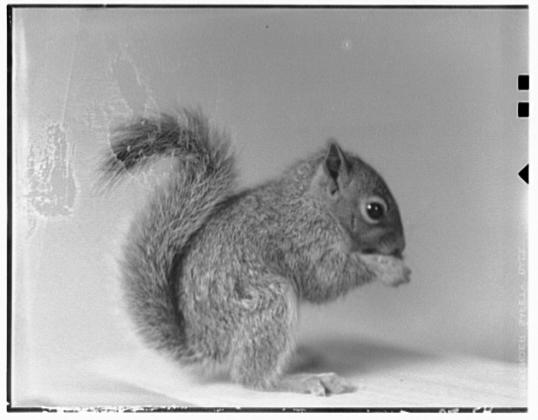
Some such residents that visitors are likely very familiar with are squirrels, running up and down trees and around the grassy areas of the Mall. There are at least five different species of squirrels that call DC home: the Eastern Gray Squirrel (Sciurus carolinensis), the Southern Flying Squirrel (Glaucomys volans), the American Red Squirrel (Tamiasciurus hudsonicus), Groundhogs (Marmota monax), and the Eastern Chipmunk (Tamias striatus).¹
By the early twentieth century, the eastern gray squirrel had become one of the most widespread mammals in the Washington area; in 1934, US Department of Agriculture (USDA) Bureau of Biological Survey Chief Field Naturalist Vernon Bailey and other scientists and park designers singled them out as valuable members of any urban ecosystem at a time when squirrels were considered to be pests by many.² The mid-nineteenth to early twentieth century period was, after all, a period of American natural history marked by rapid industrialization, urbanization, and environmental change; given that one of the main objectives of the NPS is the conservation and preservation of America’s natural spaces, wildlife research has been part of their work since the beginning.³ As the District of Columbia’s urban spaces expanded in the 1910s and 1920s, the distribution of squirrels was extended by food and nest boxes placed by residents and the Smithsonian Institution/National Zoological Park.⁴ The National Park Service did the same, placing numerous nest boxes across the parks in the city (fig. 2).
The population density of squirrels in and around the National Mall has been recorded as being much higher than in non-urban areas and other comparable parks; Lafayette Square, for example, had the highest ever reported density of squirrels at more than fifty per hectare during the fall by 1980.⁵ Environmental historian Etienne Benson argues that squirrels were an archetypical example of these new human–animal relationships that emerged in American cities in the twentieth century.⁶ Nearly a century since their introduction into modern urban environments, while the city of DC and the National Mall might look drastically different, our skittish gray neighbors continue to thrive in the trees, grass, and parks among locals and visitors alike.
Black Squirrels
Of the squirrel species that call DC home, the eastern gray squirrel is by far the most common species and the one you will likely see dozens—if not hundreds—of during your visit. But you may spot something unusual among them—DC isn’t just home to gray squirrels, but there are also pitch-black squirrels running around! Contrary to urban legend, these black squirrels aren’t a unique species; they are actually a melanistic variation of the eastern gray squirrel.⁷ However, while visitors from other parts of North America (especially Canadian visitors from southern Ontario, where DC’s resident black squirrels originate from) may see them often, black squirrels were historically an uncommon sight for many.
In the early 1900s the Secretary of the Smithsonian Samuel P. Langley and National Zoo Superintendent Frank Baker requested to obtain black squirrels from Canadian officials; originally, eight such squirrels were presented to the Zoo from Rondeau Provincial Park in Chatham-Kent, Ontario.⁸ Between two deliveries, one in 1902 and the other in 1906, eighteen black squirrels arrived at the National Zoo in DC; by 1923, at least some of these squirrels or their offspring had spread beyond the Zoo’s enclosures and into the Cleveland Park neighborhood and the nearby Rock Creek National Park.⁹
In the century since, the descendants of these black squirrels have lived through twenty presidencies, two World Wars, and a vast transformation in Washington, D.C.’s built environment. They now make up an estimated 5–25% of squirrels in the region and have spread beyond the National Park spaces where they were originally released into surrounding suburbs in Maryland and Virginia.¹⁰
Washington’s black squirrels have since become a symbol for many locals; longtime residents of the area, this author included, often count the black squirrels as their favorite resident animals. Between 2007 and 2018, the Adams Morgan neighborhood (near Rock Creek Park) in Northwest DC was home to a bar and restaurant called The Black Squirrel.¹¹ Local DC social media pages and groups often have posts about them. But their black coats of fur aren’t solely for show; in fact, some researchers have hypothesized that melanism is selected for in urban squirrels by allowing for better thermoregulation during colder months due to their darker coat color.¹² Other studies have suggested that melanism leads to significantly lower survival rates in rural squirrels while melanism in urban squirrels has little effect.¹³ While study on the selection for or against melanism in squirrels is ongoing, what is certain is that these black squirrels are much more visible in Washington DC and on the Mall than much of the surrounding region. When visiting the Mall, remember that it is illegal to feed, touch, or intentionally disturb the animals that inhabit the park; put simply, it is best to look but not touch, for their safety and yours.