Overview
The National Mall is full of larger-than-life monuments and memorials that honor and commemorate people who have shaped, inspired, and fought for the United States. But have you ever wondered who designed them and how they were built? Many people like artists, sculptors, engineers, stone masons, architects, and construction workers used their talents to create all of the monuments and memorials that you can visit on the National Mall today.
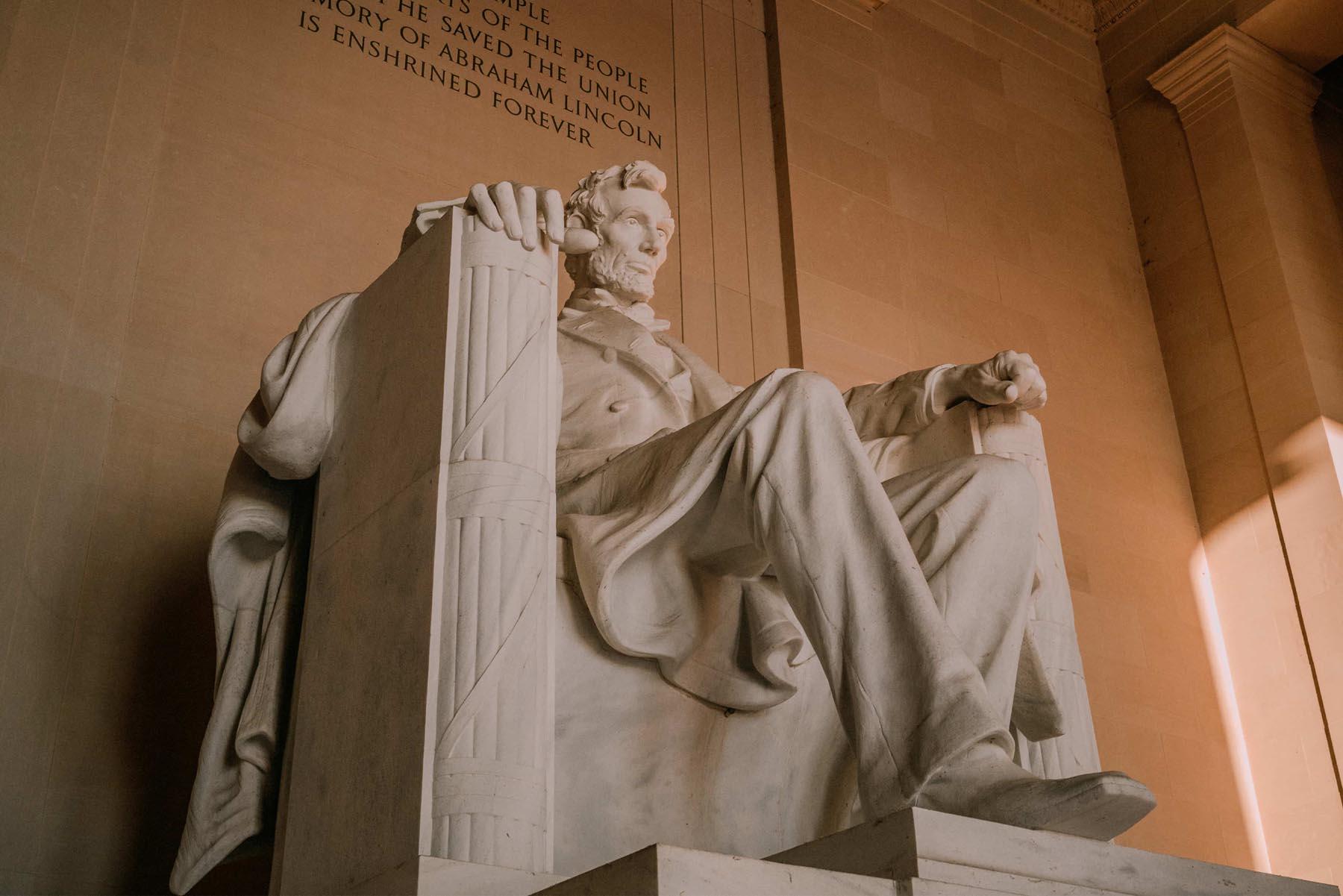
One of the most impressive sculptures on the National Mall is the enormous statue of Abraham Lincoln inside the Lincoln Memorial. Towering at 19 feet and weighing about 170 tons, this statue of Lincoln was designed by artist and sculptor Daniel Chester French who hired the Piccirilli Brothers to cut and shape the 28 pieces of white Georgia marble into the full-sized statue.
Who were the Piccirilli Brothers?
The Piccirilli Brothers were a team of six Italian-American brothers who became famous for their amazing stone carving skills. Their names were Attilio, Ferruccio, Furio, Getulio, Masaniello, and Orazio. They were born in Italy and learned how to carve stone from their father, who was a skilled sculptor. In the 1888, they arrived in New York City from Italy and opened a workshop and studio in the Bronx.
What did they do?
The brothers became well-known for turning artists’ ideas and models into real marble sculptures and their statue of Abraham Lincoln remains one of their most famous projects. The Lincoln statue was completed in 1922 and quickly became one of the most important monuments in the country.
The Piccirilli Brothers didn’t only work on the Lincoln Memorial, they also carved famous sculptures at the New York Public Library (like the stone lions out front) and decorations for buildings like Grand Central Terminal. Even though their names aren’t as well known as the artists they worked with, their skill and dedication helped create some of America’s most beautiful monuments.
How did they create the statue of Abraham Lincoln inside of the Lincoln Memorial?
Working under the supervision of Daniel French, it took about one year for the six Piccirilli Brothers to carve the Lincoln statue.
French’s Model: First, Daniel Chester French sculpted a detailed clay model of Lincoln. He made several versions and then created a final one about 6 feet tall.
Scaling Up: The Piccirilli Brothers used a process called pointing to scale up the model. This meant measuring thousands of tiny points on the small model and marking them on the large blocks of marble. This helped them keep the exact shape and proportions when carving the full statue.
Choosing the Marble: The statue was made from 28 blocks of white Georgia marble. This type of marble is strong and smooth, which made it perfect for a sculpture that would be seen by millions of people for many decades to come.
Carving the Statue: The brothers carefully carved the marble blocks in their studio in the Bronx in New York. They used chisels, hammers, and other tools, slowly shaping the stone to match French’s design. This took a lot of time, patience, and teamwork. They were known for their amazing attention to detail – every fold in Lincoln’s clothes and each strand of hair was carved by hand.
Transporting and Assembling: Once the carving was finished, the 28 marble blocks were shipped to Washington, DC. There, the brothers worked with another team of people to assemble them like a giant puzzle. The final statue stands 19 feet tall and weighs about 175 tons.
A common practice at the time, only the artist, Daniel Chester French’s signature was engraved on the stone at the Lincoln Memorial’s unveiling. However, when you visit in person today, you’ll find a plaque with the Piccirilli Brothers’ names that acknowledge their extraordinary work and talent.