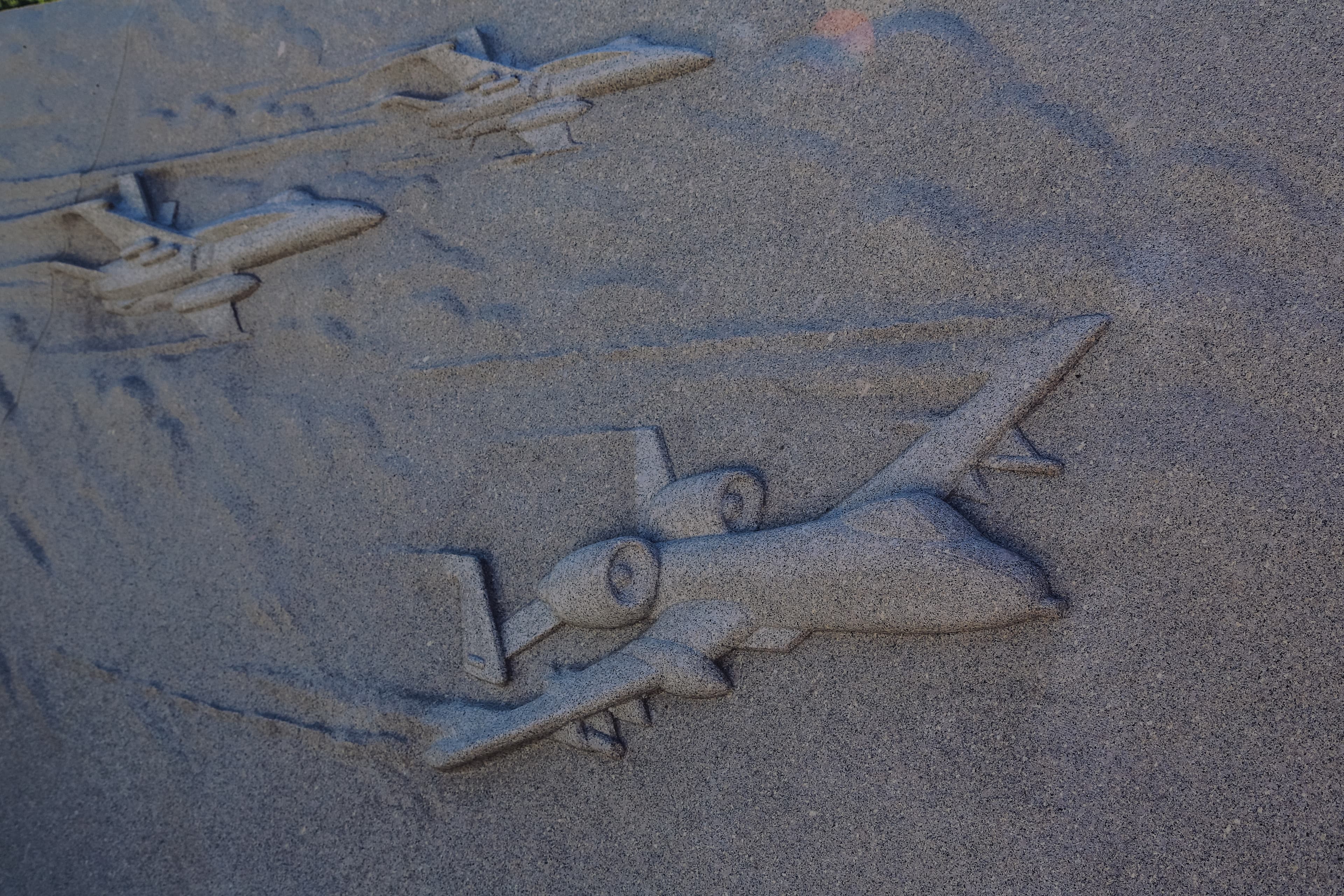
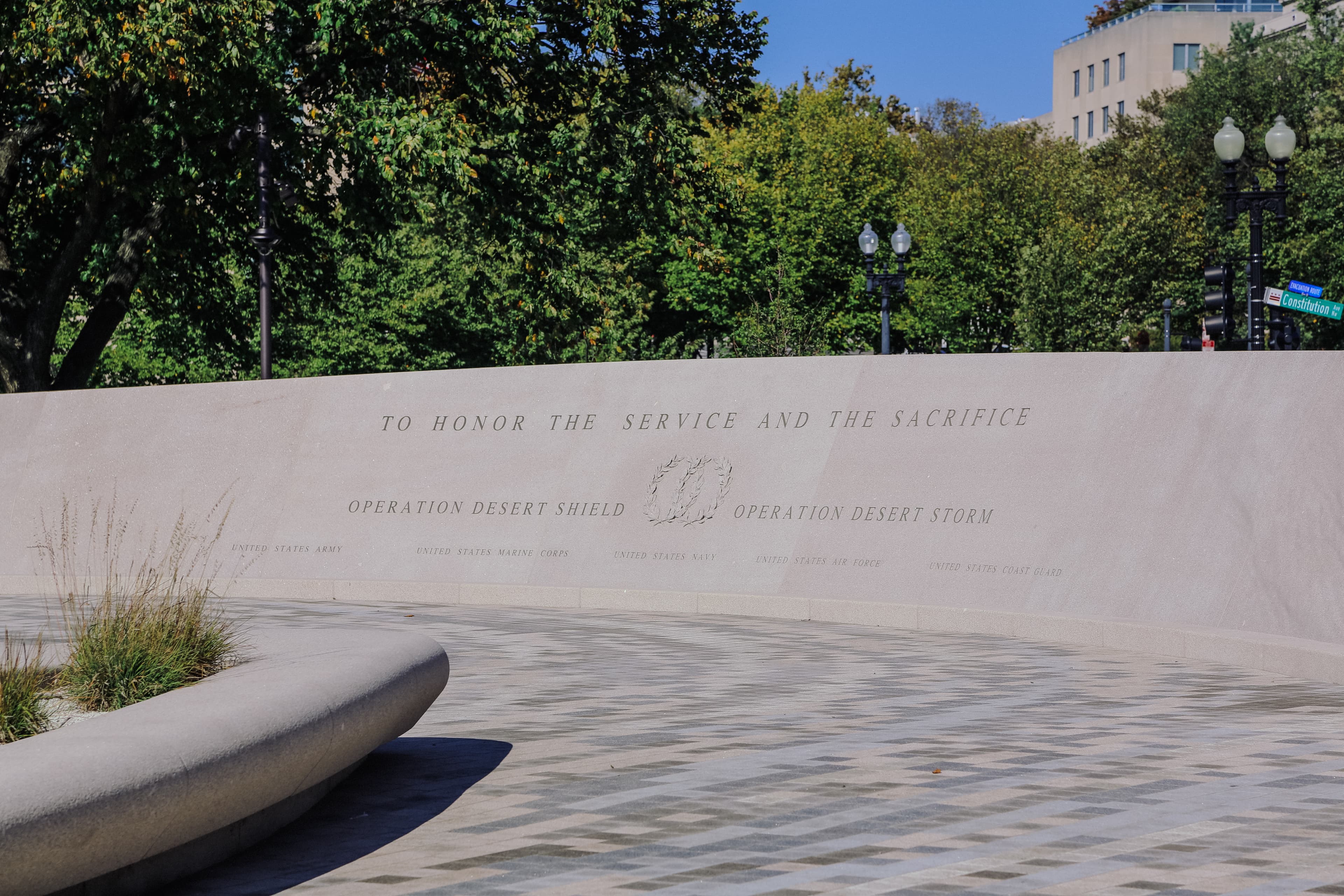
Desert Shield and Desert Storm Memorial
12 23rd St NW, Washington, DC 20004
Amenities
- Wheelchair accessible
- Open 24 hours
- Food & drink — Concession stand across Henry Bacon Drive from Vietnam Veterans Memorial
- Restrooms — Available at the Lincoln Memorial and towards the middle of the northern side of the Reflecting Pool. Daytime hours vary
- Food & drink — Retail options near Foggy Bottom area, 10 minutes walk away
There are several multi-year construction projects ongoing around the Desert Shield and Desert Storm Memorial. While visiting the Memorial is not impacted, some adjacent sidewalks and pedestrian trails are closed at this time. The Theodore Roosevelt Memorial Bridge is undergoing multi-year rehabilitation work, with intermittent closures for vehicles and full closure of pedestrian and cyclist access at this time.
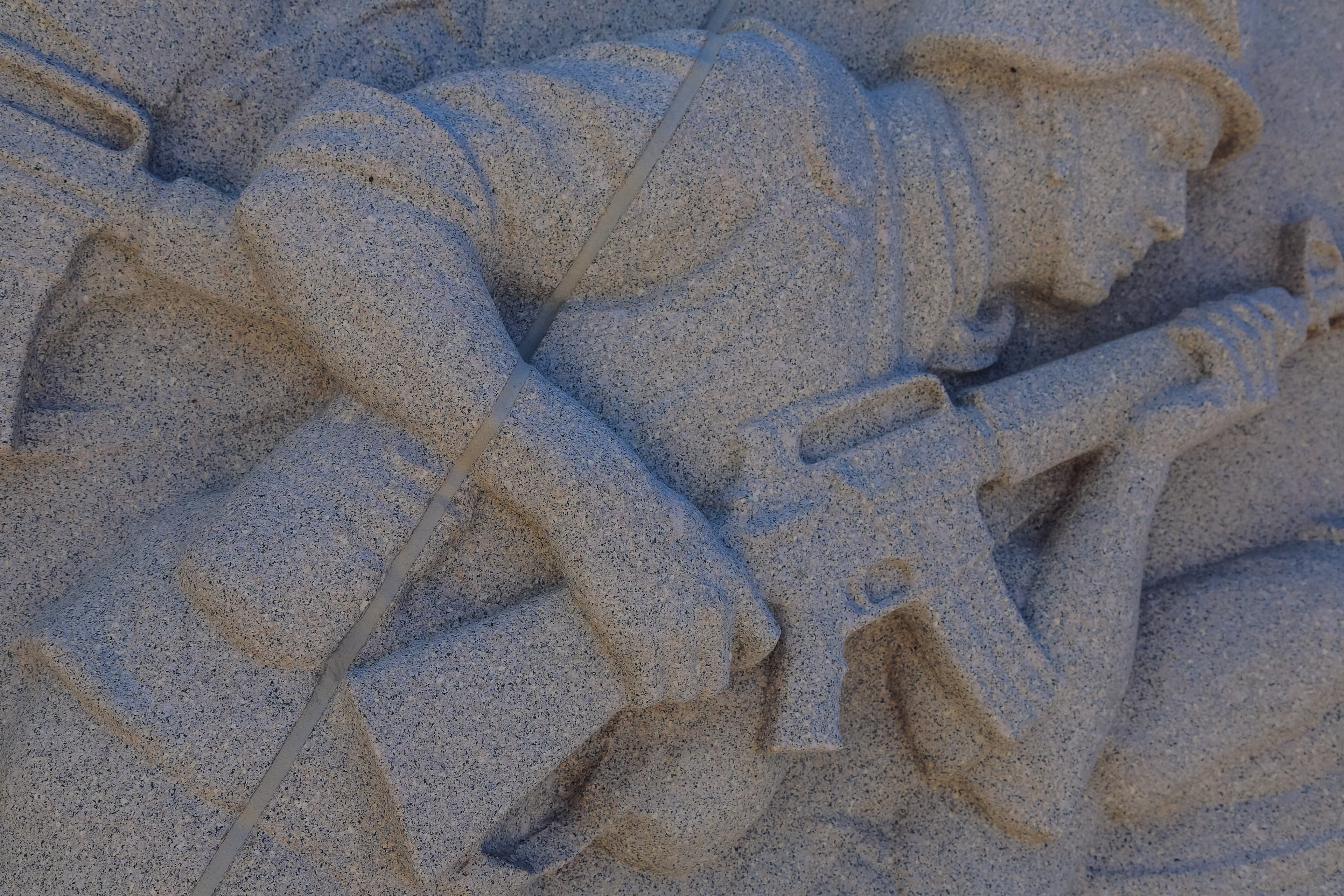
The National Desert Storm and Desert Shield Memorial honors the members of the United States Armed Forces who served during Operations Desert Shield and Desert Storm in the Gulf War. The war began after Iraq, led by Saddam Hussein, invaded Kuwait August 2-4, 1990. Iraq then set up a government in Kuwait that was controlled by the Iraqi-backed Ba'ath Party. In response, the United States and a coalition of countries working through the United Nations launched a seven-month campaign to free Kuwait.
The Gulf War, sometimes called the Persian Gulf War, was made up of two military operations: Desert Shield and Desert Storm. Operation Desert Shield lasted from August 2, 1990, to January 17, 1991. During this time, U.S. and coalition forces moved troops and equipment into the region and helped defend Saudi Arabia from possible attack.
Operation Desert Storm began on January 17, 1991. It included a major air campaign against Iraqi military targets, followed by a ground offensive into Iraq and Kuwait. The operation ended with the liberation of Kuwait and the defeat of Iraqi forces there.
The Gulf War was caused by several key historical events and complex geopolitical issues from the prior decades across the Middle East:
Nearly seven hundred thousand American servicemembers took part in the conflict, with 148 battle casualties and 235 non-combat in-theater deaths and a further 467 wounded in action. Coalition forces suffered several hundred more casualties, with estimates ranging from 292–379 KIA, and approximately eight hundred WIA. Including the invasion of Kuwait, over a thousand Kuwaiti soldiers and civilians lost their lives, as did thousands to several hundreds of thousands of Iraqi civilians, and millions of Kuwaiti and Iraqi civilians were displaced from their homes in the aftermath.
As any monument or memorial constructed on the National Mall is required to do so, funding for the creation and construction of the Memorial was solely from private donations. In the case of the Desert Shield and Desert Storm Memorial though, a poignant fact to highlight is that the largest donation—at $25 million—came from the nation of Kuwait, a diplomatic gesture of gratitude for the American and Coalition liberation of the country.
History
Timeline of events
The Washington City Canal, built along the route of Tiber Creek from the Potomac River on the north side of the Mall to the Anacostia River near Navy Yard, opened to traffic.
Civil engineer Alfred Landon Rives submitted plans to reclaim 166 acres of mudflats near Long Bridge to make a park.
B Street North (now Constitution Avenue) was built on top of the main length of the covered and filled-in Washington City Canal between 15th Street and Virginia Ave.
The Army Corps of Engineers conduct several land reclamation projects in the Potomac Flats area, and as a by-product of dredging, the area that is the National Mall is extended west of the Washington Monument.
Congress passed Senate Bill 3307 which stated that the 723 acres of reclaimed land be designated Potomac Park and be developed as a public park for scenic and recreational purposes. This would also include the Tidal Basin.
The McMillan Plan proposes the elimination of Victorian landscaping and the narrowing of the National Mall, paving the way for museums and cultural institutions along its grounds. It additionally proposes the removal of rail stations and infrastructure from the Mall, influencing the locations of the Lincoln Memorial, Union Station, and Arlington Memorial Bridge to this day.
B Street NW extended through the newly created West Potomac Park between Virginia Ave. NW and 23rd St. NW, in front of the Memorial.
The Office of Public Buildings and Public Parks (OPBPP) was transferred from the Army Corps of Engineers to the office of the U.S. president. They would eventually be renamed the National Capital Parks in 1933.
President Herbert Hoover signs into law a public resolution renaming B Street North as Constitution Avenue.
Executive Order 6166, signed by President Franklin D. Roosevelt, abolished the Office of Public Buildings and Public Parks of the National Capital and assigned their functions to the Office of National Parks, Buildings, and Reservations in the Department of the Interior.
Iran-Iraq War
Iraqi forces under Saddam Hussein invade neighboring Kuwait and install a puppet government.
Operation Desert Shield commences. United Nations Security Council Resolution 660 condemns the invasion and calls for the immediate withdrawal of Iraqi forces from Kuwait.
Operation Desert Storm takes place.
Liberation of Kuwait Campaign, alternatively called Operation Desert Sabre, sees American and Coalition forces launch a major offensive into occupied Kuwait, in the “100-hour war” that ended the conflict.
Operation Desert Farewell, alternatively called Operation Desert Calm, sees the gradual retreat of American and Coalition forces out of the region with the conflict’s end. This process would take nearly a year to complete.
National Victory Celebration parade on the National Mall celebrates the end of the conflict. The parade route also included 23rd Street and Constitution Avenue NW, passing by the location where the Memorial would eventually be built.
National Desert Storm War Memorial Association CEO Scott C. Stump conceived of the Memorial as the twentieth anniversary of the conflict neared.
The National Desert Storm and Desert Shield War Memorial Act (HR 503) is passed, authorizing the Association to establish the Memorial.
The site dedication ceremony is held.
The groundbreaking ceremony beginning construction on the National Desert Storm and Desert Shield Memorial is held.
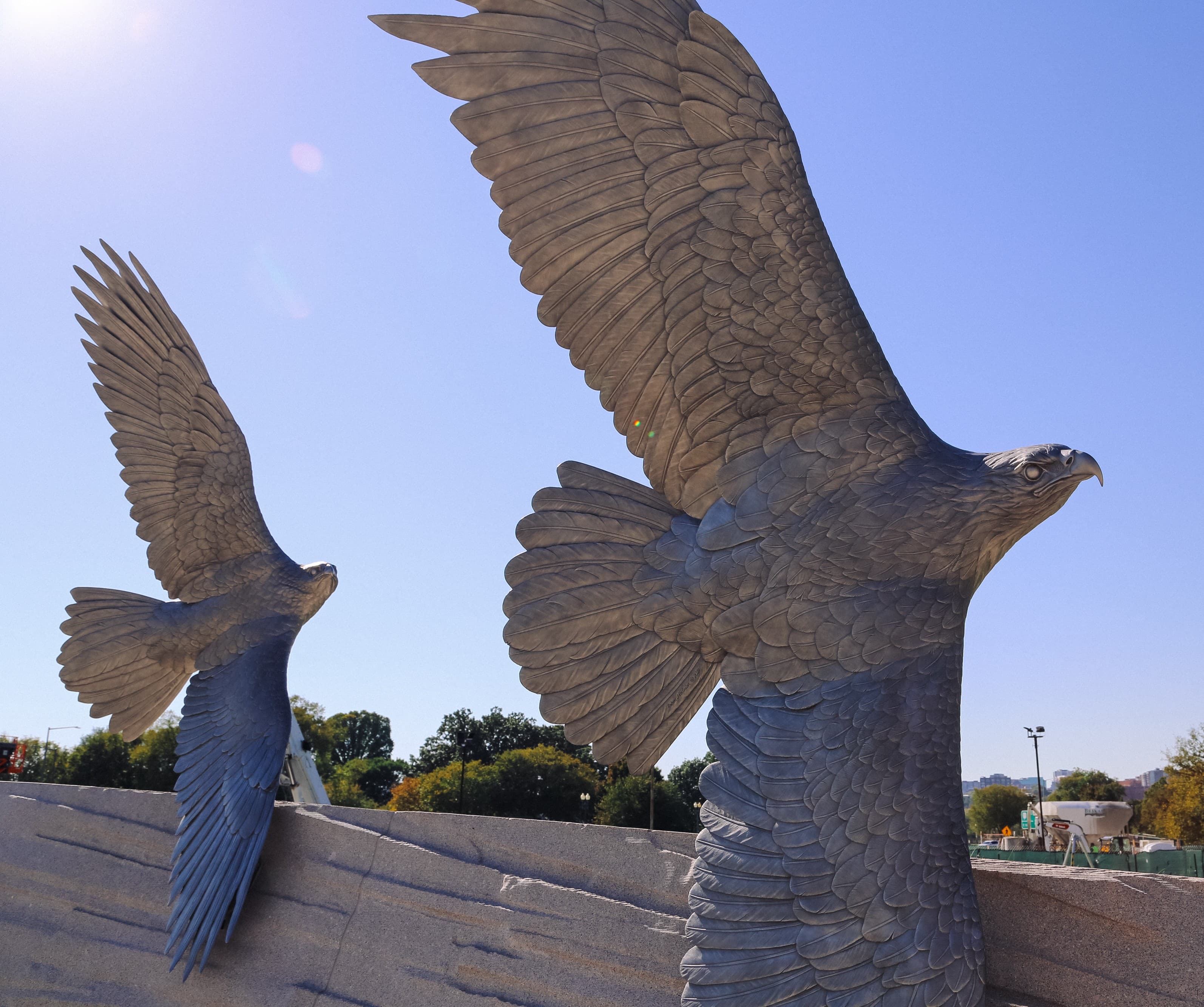
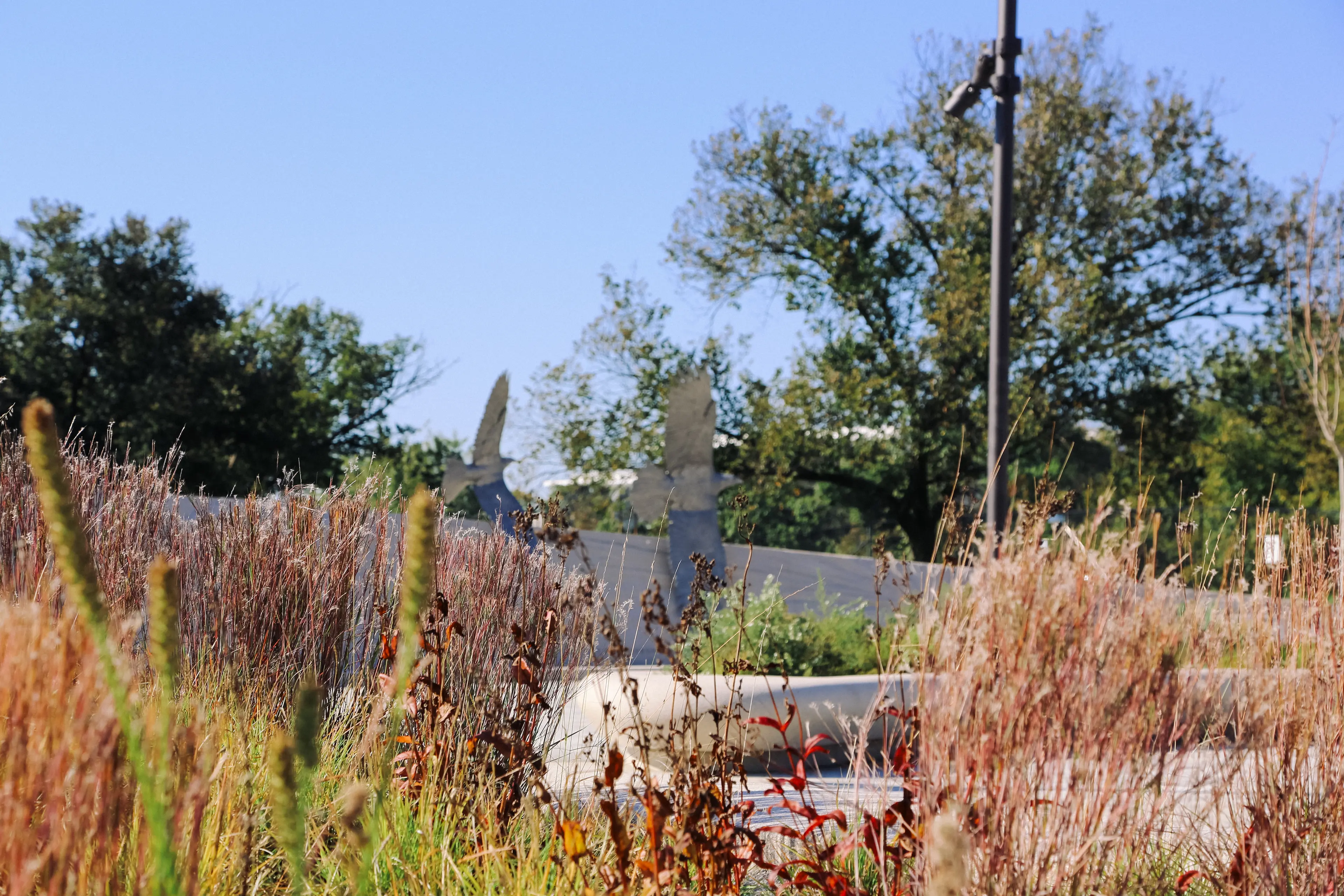
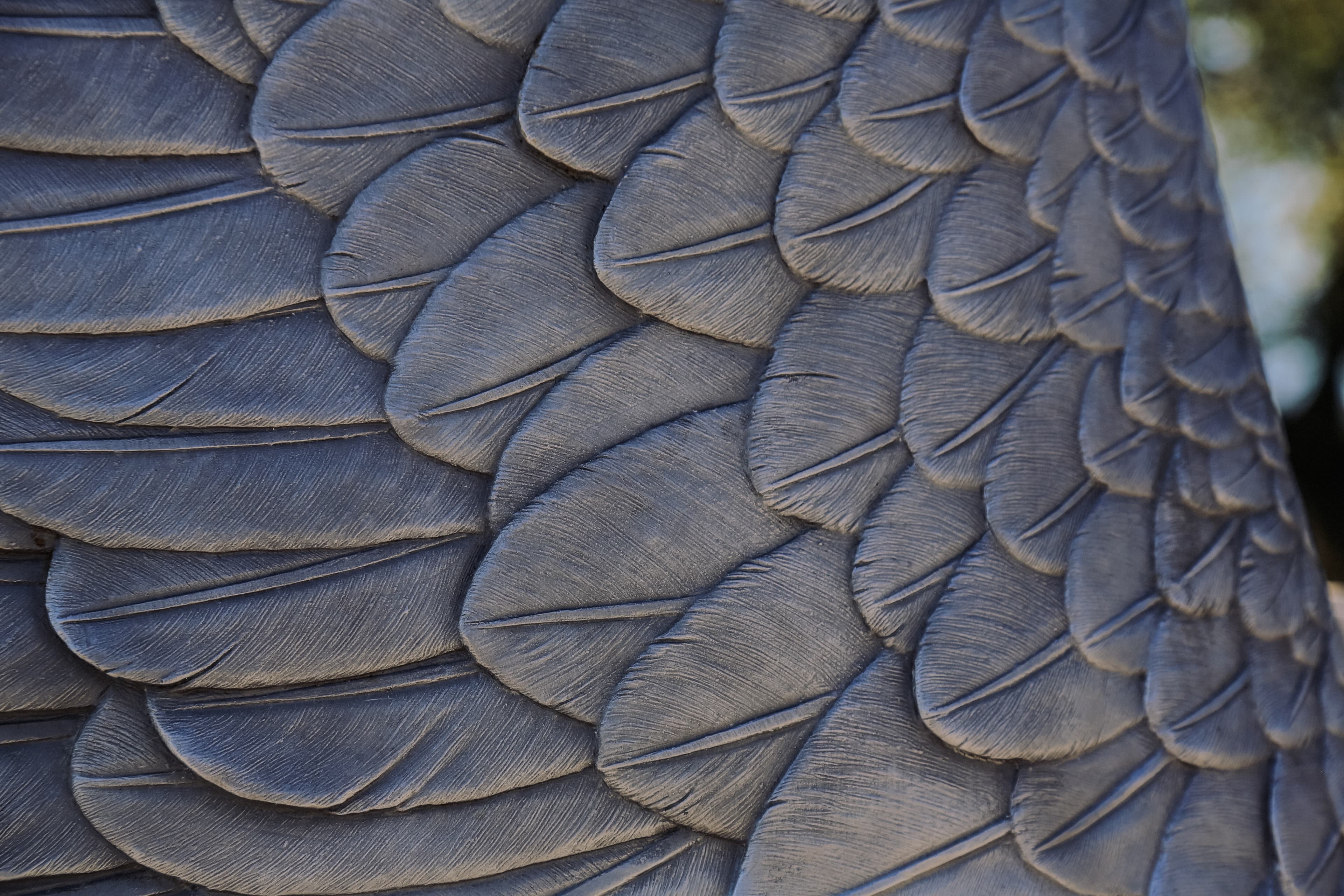
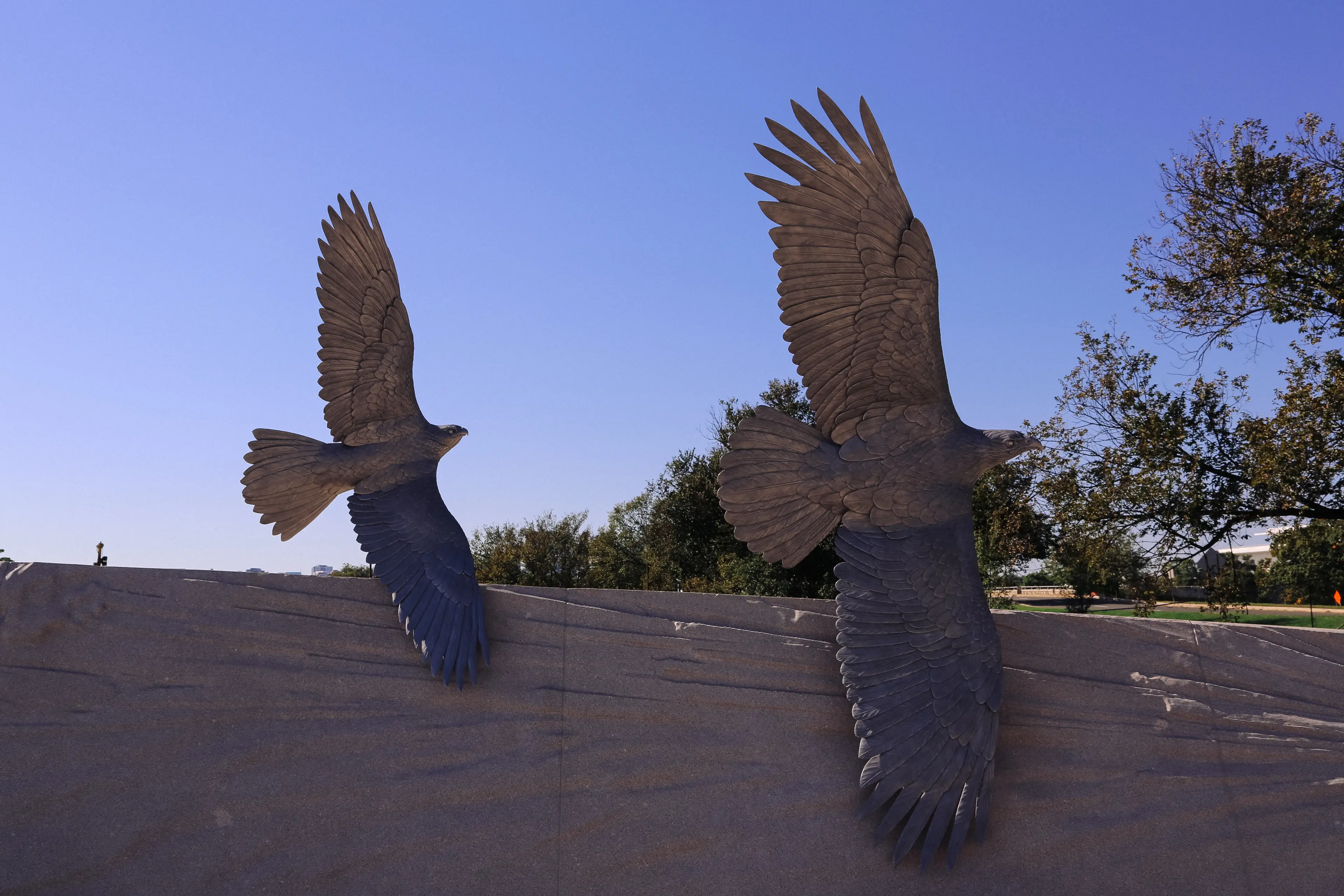
The Raptors are designed, sculpted, and cast.
The dedication ceremony is held.
Key Features
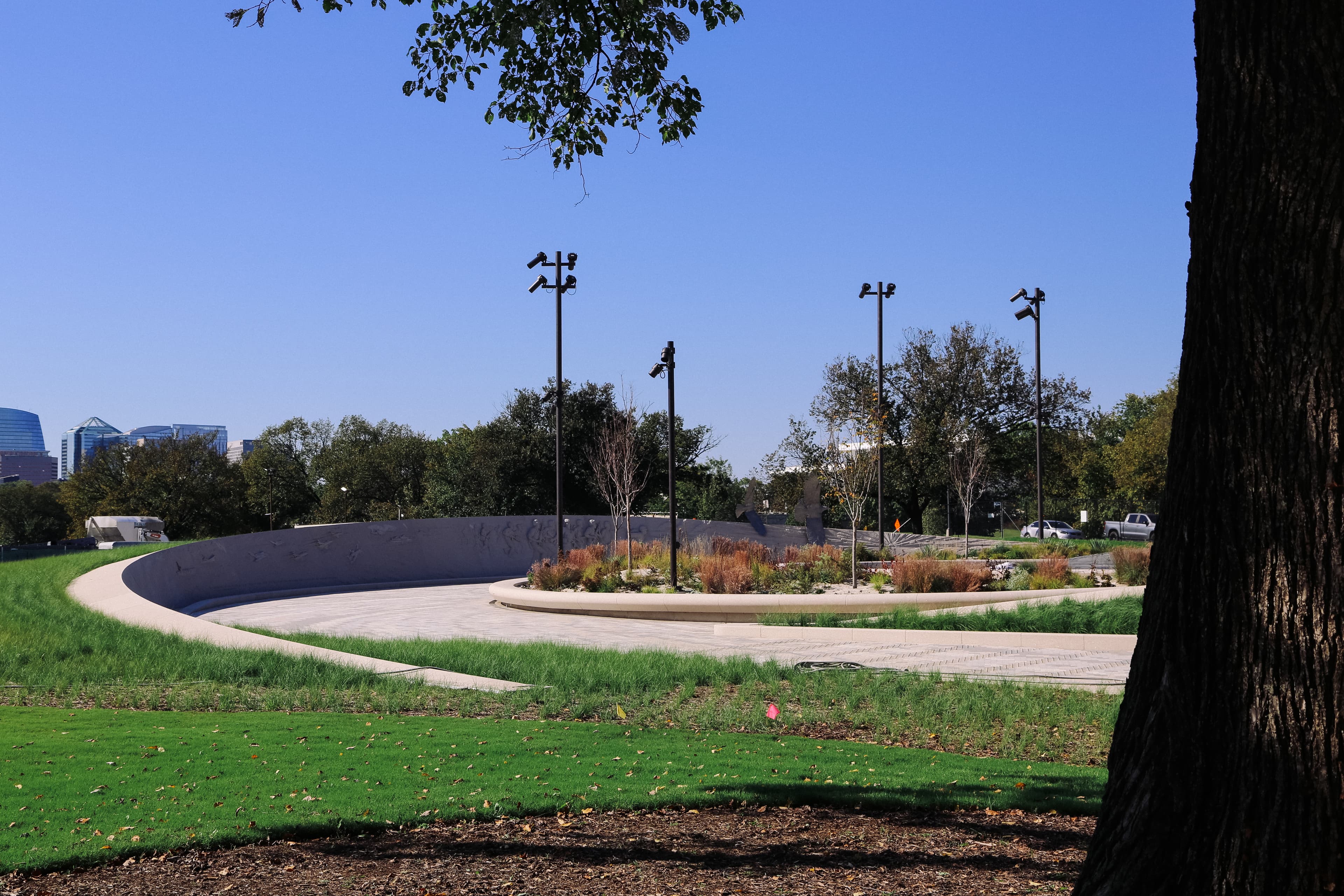
The entire Memorial was designed around the concept of the ‘left hook’, the maneuver which became emblematic of the rapid invasion that saw American and Coalition forces blitz north into Iraq towards Nasiriyah before turning east (right) and forming a strategic envelopment of Iraqi forces in and around Kuwait.
When visitors enter through the main entrance (looking south down 23rd Street NW towards the Lincoln Memorial, on the side with the Memorial name inscription), the walkway towards the right, facilitating a 'left hook' movement into the Memorial.
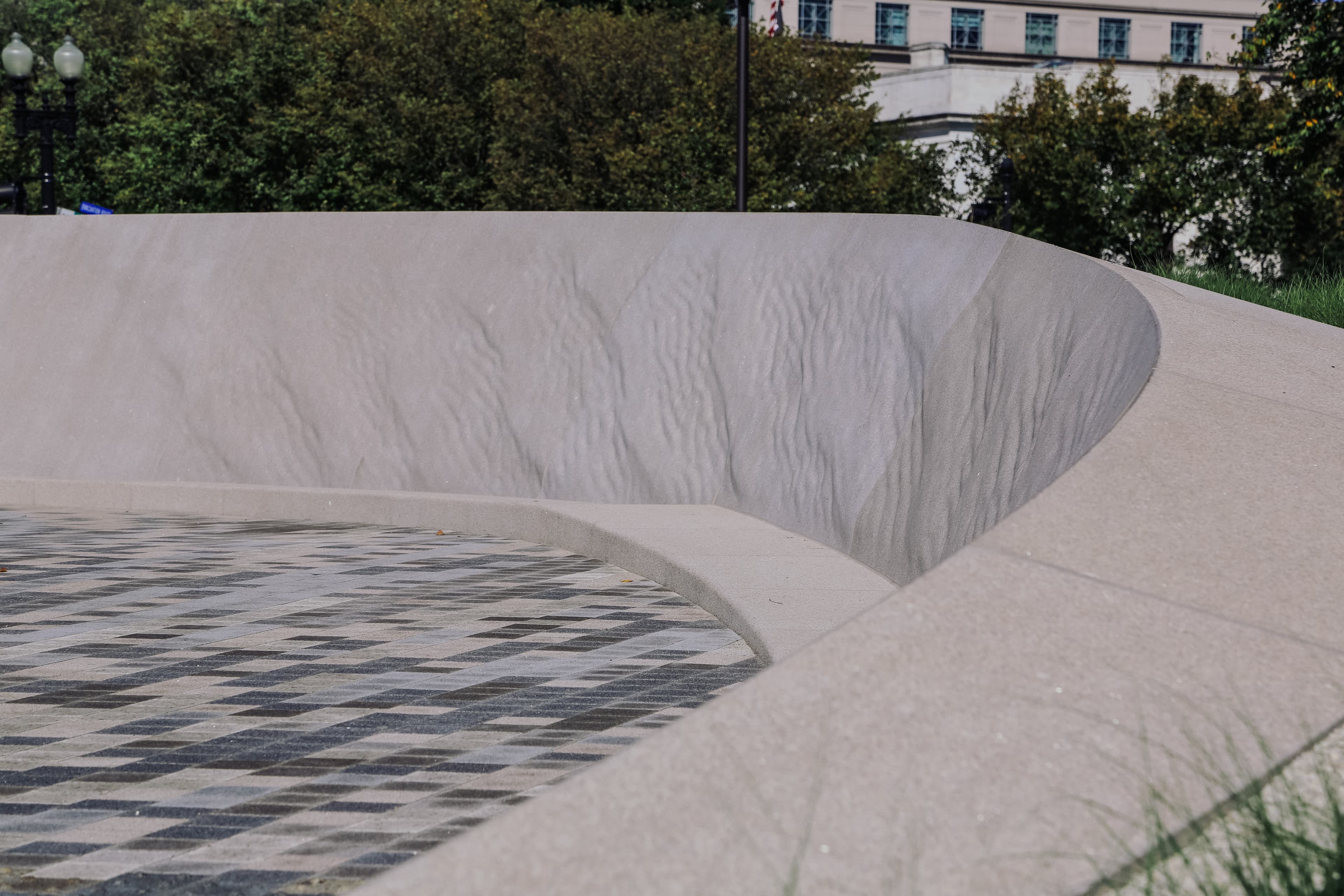
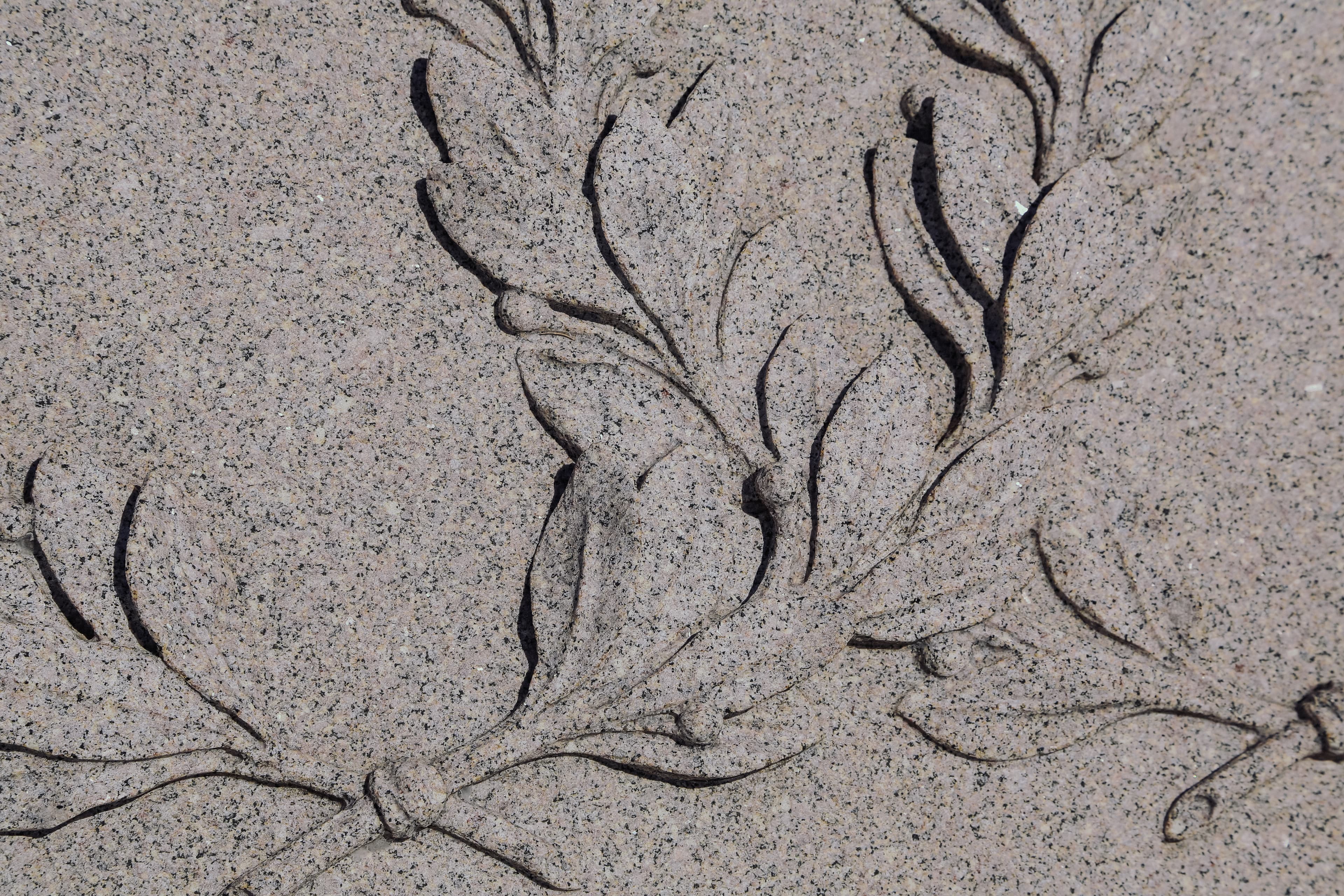
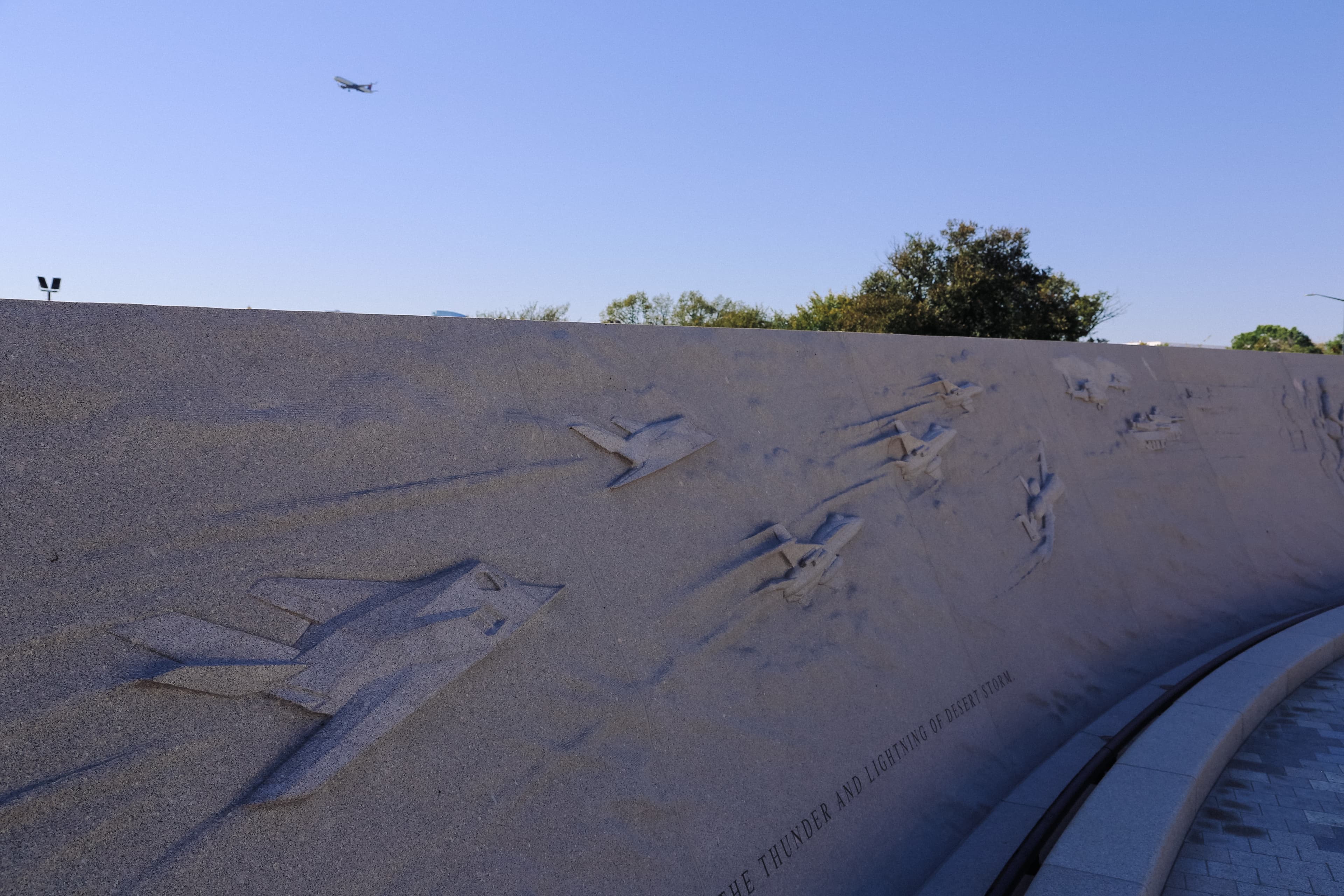
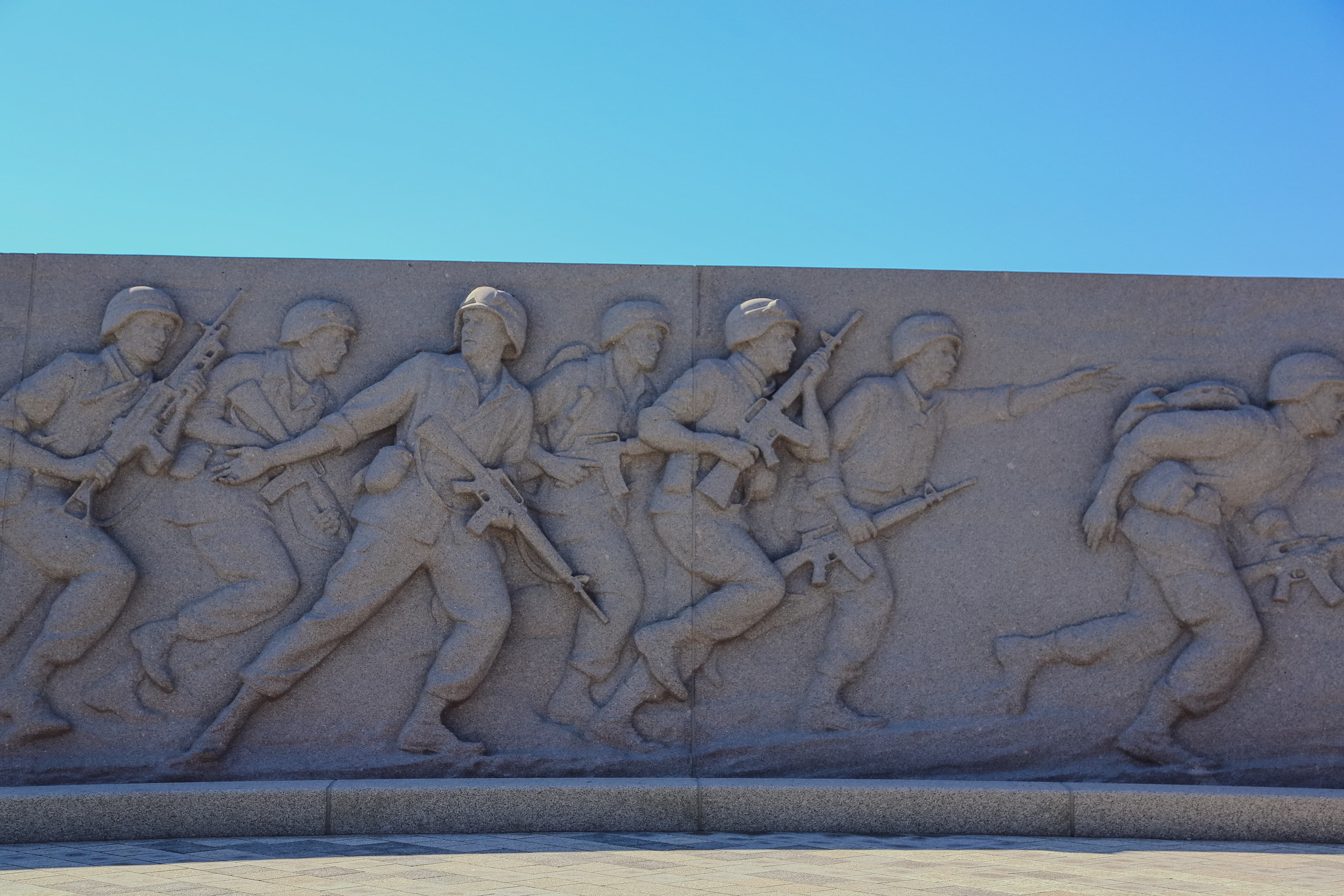
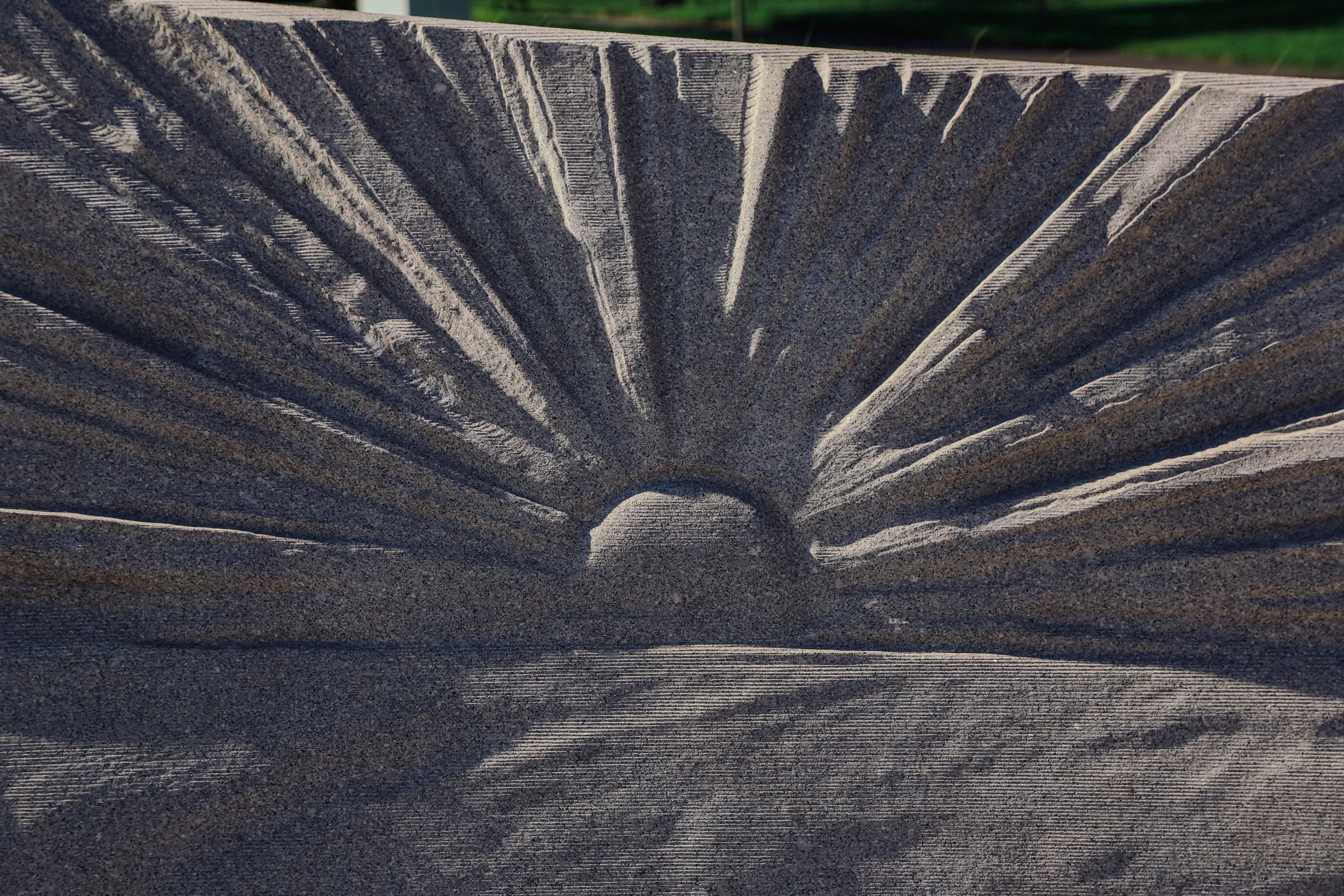
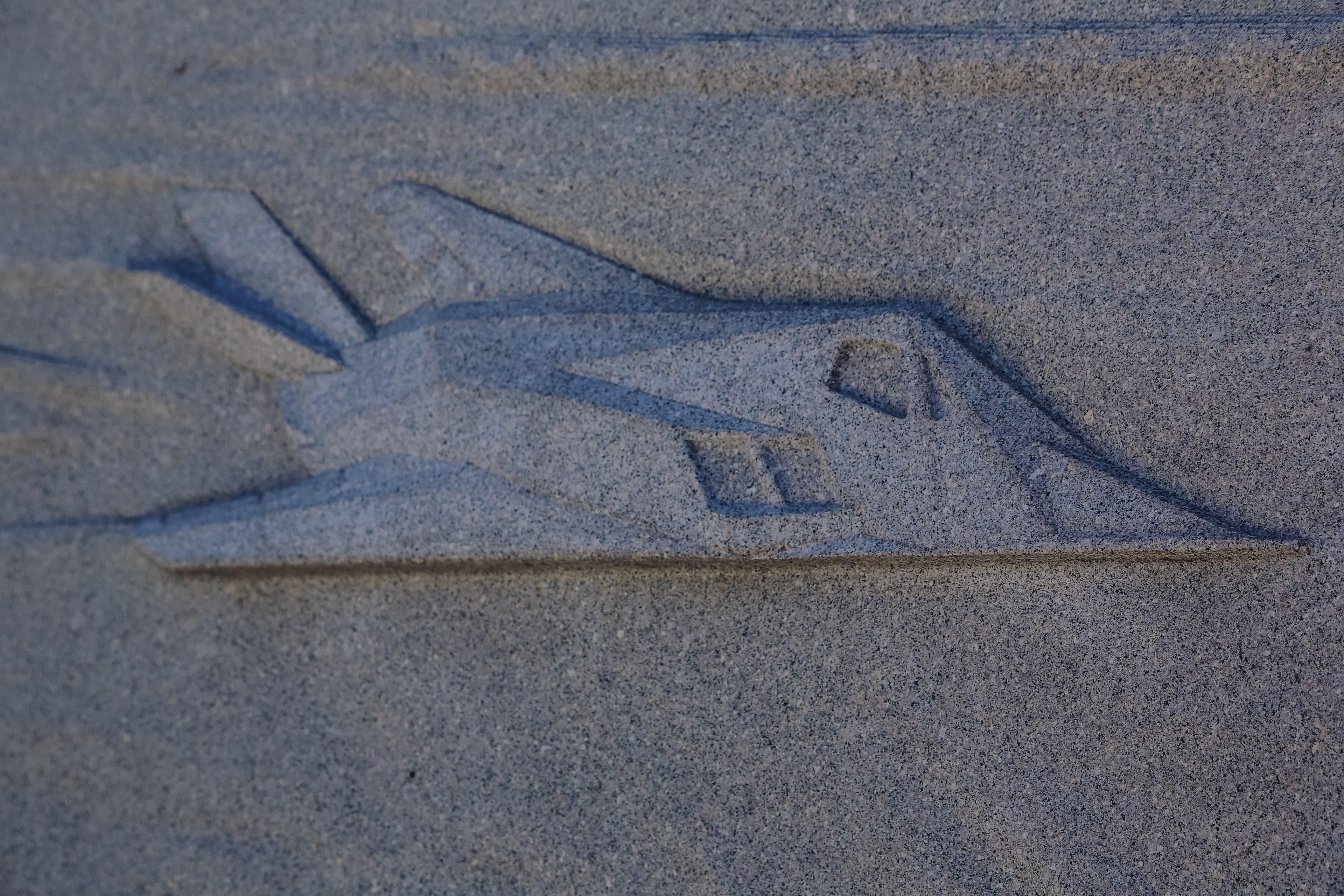
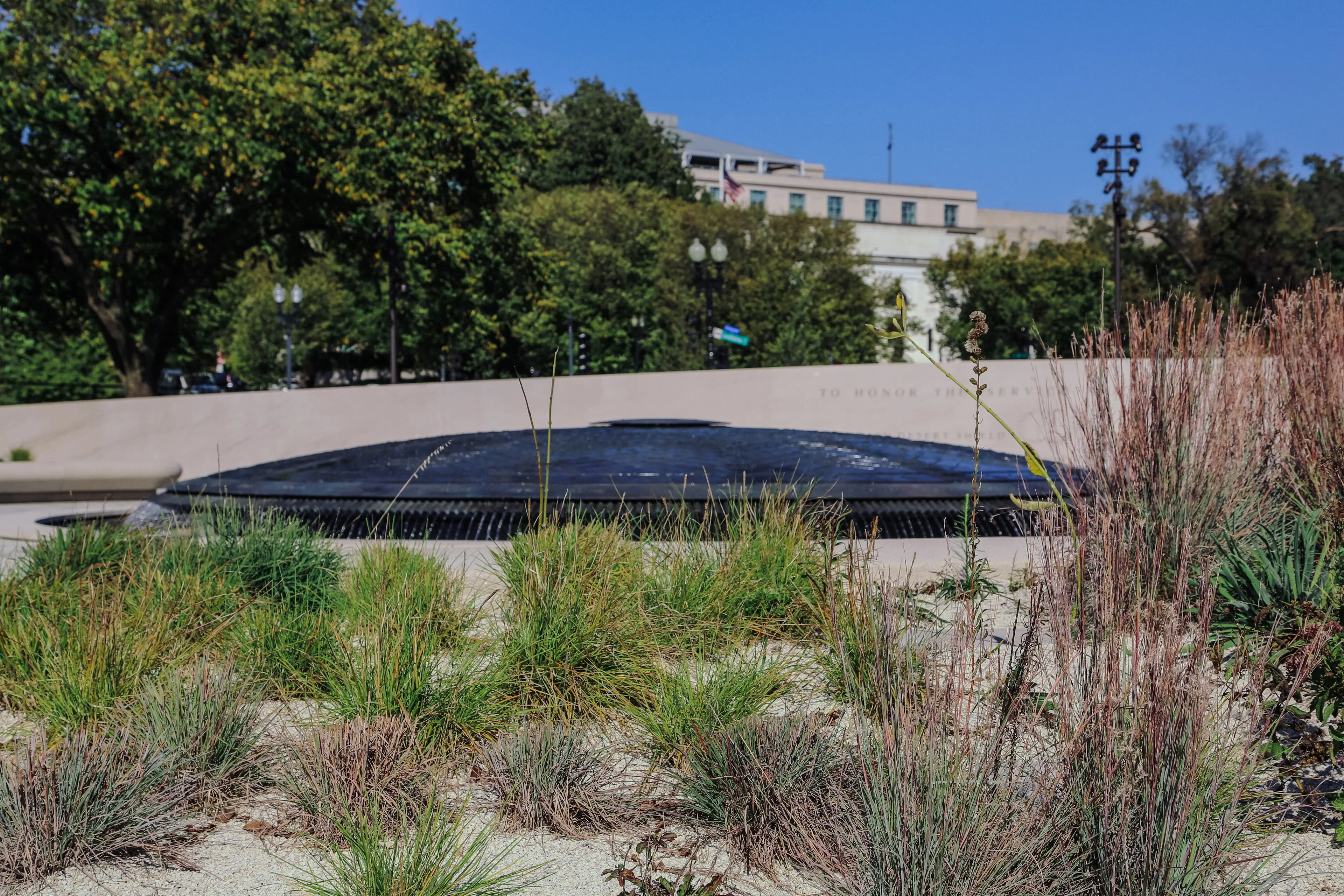
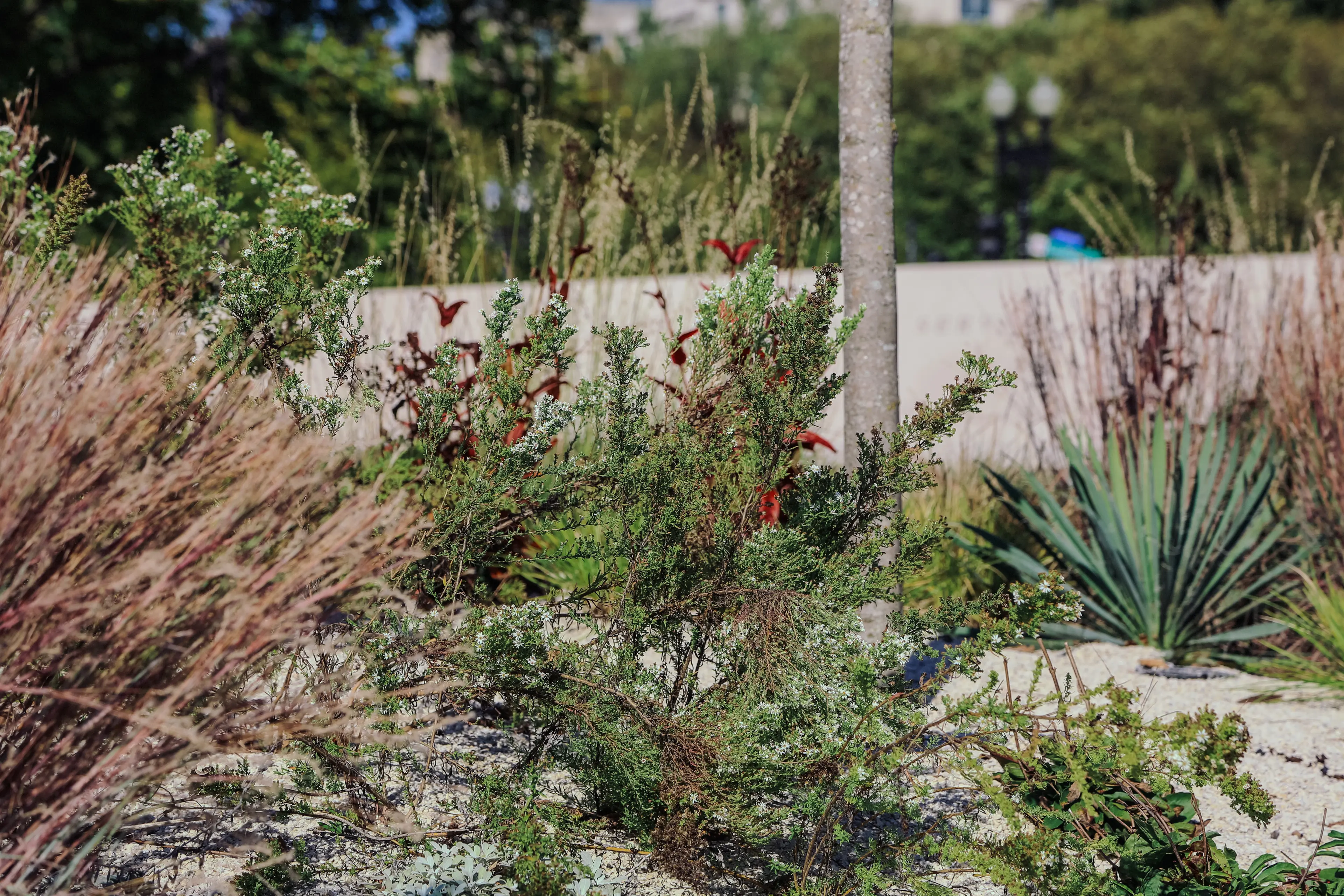
Other features include:

Cultural Impact
The location of the Desert Shield and Desert Storm Memorial actually has a direct relationship to the conflict! On June 8, 1991, the National Victory Celebration commemorating the end of the conflict saw the military parade pass through the Memorial’s location on its way from the Mall to Arlington National Cemetery! Check out the Flyovers Mall Moment to see some photos!
Reflection Questions
Reflection Questions
Our nation’s past is complex and often provokes reflection, especially as we look to the future.
Educational Activities
Other Resources
Interested in learning more? The following links will provide you with additional context and information: